
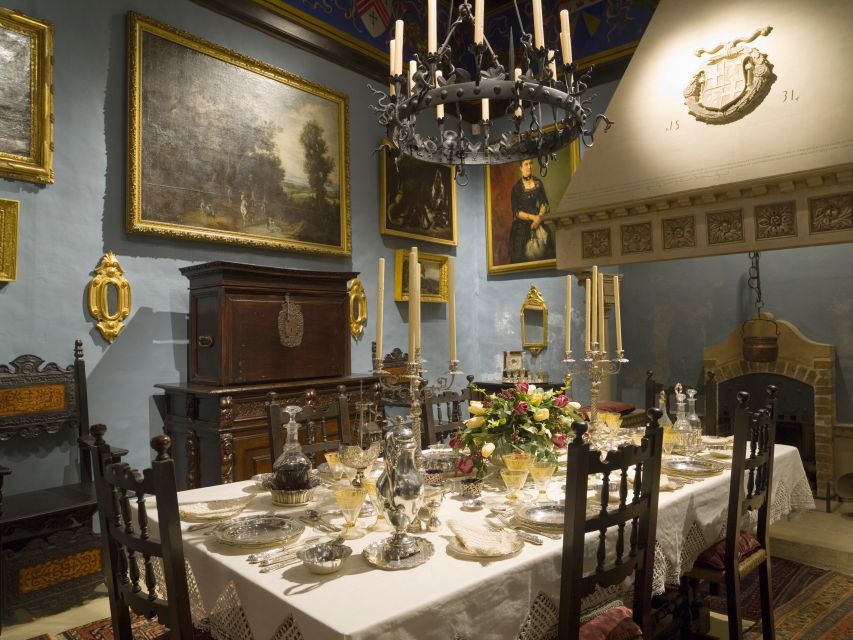
Reviewed · HISTORICAL TOURS
Palazzo Falson Historic House Museum entrance ticket
Palazzo Falson Historic House Museum in Mdina is interesting because it’s both a medieval home and a collector’s world, packed into one walkable building. I love the logic of the layout, rooms wrapped around an internal courtyard, topped by the piano nobile (the noble floor) where daily life likely unfolded. I also love that you’re not looking at one single highlight, you’re moving through 17 rooms that each feel like their own chapter.
One thing to keep in mind: there’s a lot here. With 45 specific collections and over 3,500 objects, you’ll want to move at a human pace, not a checklist pace, and it’s not suitable for children under 6.
Quick reasons to go inside Palazzo Falson
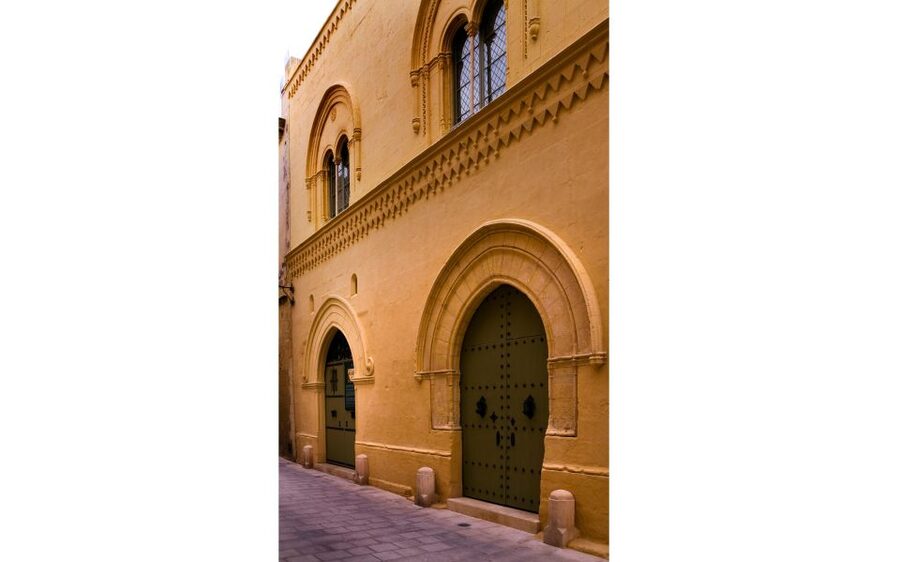
- Medieval Mdina building with real structure and rooms, not just a showroom
- 45 collections across 17 rooms, so you’ll see art, silver, textiles, and more in context
- Major 17th-century painting attributions, including artists like Mattia Preti and Jusepe de Ribera
- A serious library, including 4,500 books and valuable manuscripts
- Terrace café views of Mdina and beyond, a smart place to reset during your visit
Ticket value: what $15 buys you in Mdina
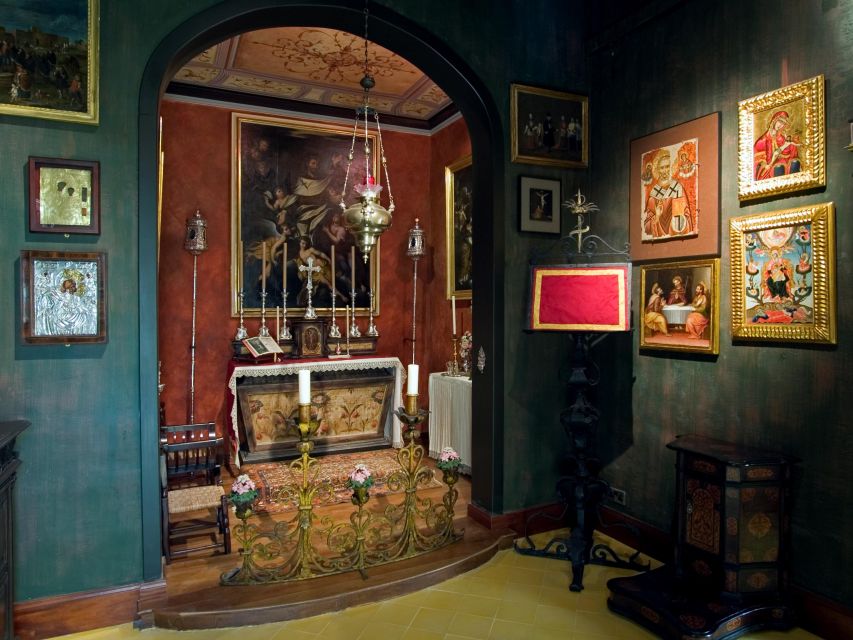
For a $15 per person ticket, Palazzo Falson is one of those places where the price feels tied to the experience, not the souvenir shop. You’re paying for access to a functioning house museum with a huge inventory of objects and themes, plus interpretation tools.
The big value piece is the audio guide included. It’s available in English, French, German, Italian, Maltese, and Spanish, and it keeps you moving through the rooms without forcing you to read every label. If you prefer to absorb information while standing still for a minute, audio is the best way to do that here.
You also get printed info in many languages, which matters if you like cross-checking what you hear with what you can quickly scan in your own language. Between the audio guide and the room layout, you’ll get a coherent story of the house and the collections, not random objects thrown together.
A few more Mdina options to weigh up
- Mdina: St. Paul’s Cathedral and Mdina Museum Entrance Ticket
★ 4.5 · 89 reviews - Mdina: The Knights of Malta Museum Entry Ticket
★ 4.3 · 63 reviews - Malta Classic Car Collection Museum Entry Ticket
★ 4.9 · 247 reviews
Where Palazzo Falson sits in Mdina, and why the building matters
Palazzo Falson is in Mdina, Malta’s former capital city, the walled city that still feels like you’re stepping into a different rhythm. The palace itself is one of the oldest standing buildings in Mdina, and that age shows in how the space works.
Its origins stretch back to the early 13th century, and it’s a two-storey medieval palace built on Sicilian examples of its period. That detail matters because it’s not just “old.” You can feel the older design logic: rooms wrapped around an internal courtyard, with the overlying piano nobile containing the original living quarters. The set of rooms at the back of the courtyard is said to be the oldest part of the building, so as you wander deeper into the structure, the house’s timeline comes through in a physical way.
You’ll also notice how the palace has carried multiple identities over time. It has been known as Palazzo Cumbo-Navarra, Casa dei Castelletti, and The Norman House, before reopening to the public in May 2007 after major restoration by Fondazzjoni Patrimonju Malti (Maltese Heritage Foundation).
That restoration angle is worth knowing. It’s not a “let’s open a room and call it historic” situation. The palace was brought back for public viewing, so the experience is built around you moving through a carefully maintained interior.
The story behind the house: nobles, the Knights, and Captain Falson
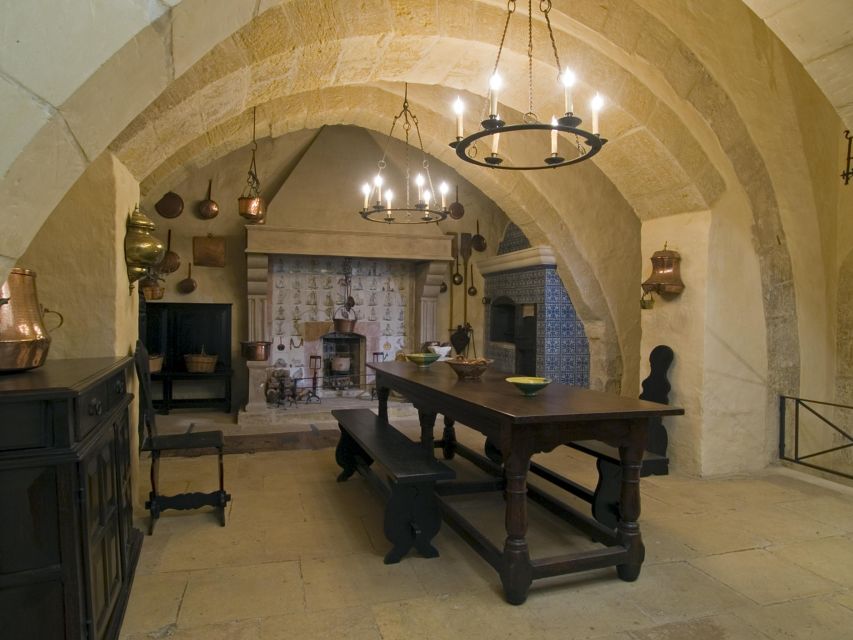
To enjoy Palazzo Falson, you don’t need a doctorate, but you do benefit from knowing why this home became a museum.
In the early 16th century, the property was inherited by Vice Admiral Michele Falson, the Head of the Town Council. Then came the Knights of the Order of St. John. When Malta was donated to the Knights by Emperor Charles V, Grand Master Philippe Villiers de L’Isle Adam was hosted by Maltese nobles at Palazzo Falson after a ceremony where he took possession of Mdina on 13 November 1530. That turns the palace into more than a private residence, it becomes part of the public power story of the city.
The most recent resident and owner, Captain Olof Frederick Gollcher O.B.E., adds a different kind of meaning. Of Swedish descent, he was a researcher, artist, philanthropist, and a passionate collector of objets d’art and historical items. The collection you see today reflects his taste and patience, and it’s why the museum doesn’t feel random. It feels built around one person’s eye, spread across many categories.
Touring the 17 rooms: how to avoid the overload
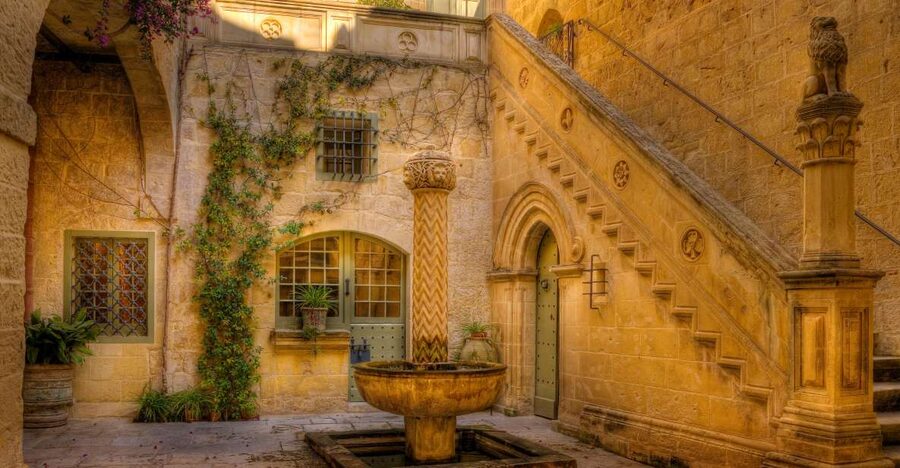
With 17 rooms and 3,500+ objects, your main job is pacing. I recommend you start with the audio guide and let it steer your first pass. Once you know the museum’s “voice,” you can slow down in the rooms that pull you in.
Here’s how the experience tends to work once you’re inside:
- You orient through the house layout. The internal courtyard is the anchor, and it helps you understand the palace shape as you move between areas.
- You move through themed spaces. The museum’s collections are grouped into forty-five specific categories, so a room might focus on one material, one type of object, or one theme rather than mixing everything together.
- You save your second pass for what grabbed you. There’s no prize for finishing fast. The objects are the point, and the comparisons between categories are part of what makes this museum satisfying.
This is where the one drawback becomes real. If you rush, you’ll miss the tiny story connections, like how furniture design and silverwork sit next to each other as examples of taste, or how a textile category changes how you imagine everyday life.
Same islands, a different way to spend the day:
- Malta: Highlights of Malta & Mdina Full Day Tour with Lunch
★ 4.4 · 2,688 reviews - Malta: Mdina and Rabat Walking Tour with Catacombs
★ 4.8 · 1,126 reviews - Malta: Mdina, Dingli Cliffs and San Anton Botanical Gardens
★ 4.3 · 991 reviews - Mdina and Rabat: Guided City Walking Tour
★ 4.8 · 549 reviews
The collections you’ll actually want to prioritize
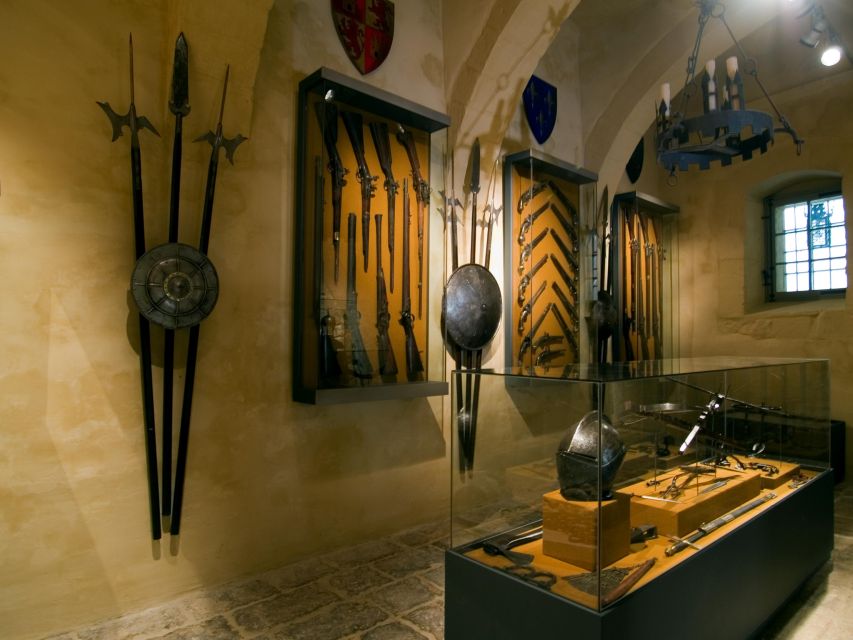
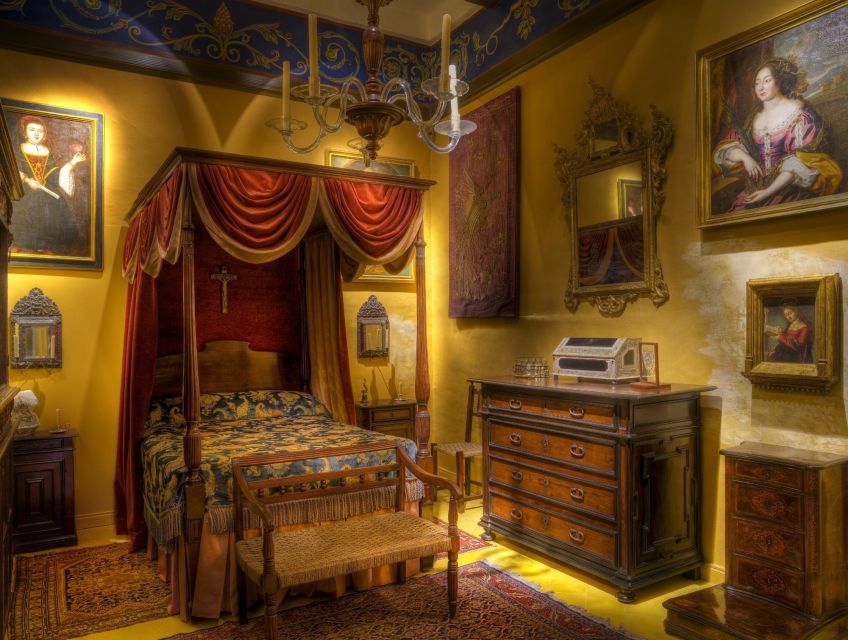
Palazzo Falson covers a wide range: silver, furniture, jewellery, Oriental rugs, and armoury. That variety is one of the highest-value parts of the visit, because it gives you a multi-sense idea of wealth, trade, and daily status in Malta’s noble circles.
Silver, furniture, and jewellery as “everyday power”
It’s easy to look at metalwork and think of it as decoration only. In this house museum, you can read it as a sign of ownership and craftsmanship. The pieces aren’t presented in isolation, they sit in rooms that match the era, so they feel like part of a lived environment. If you enjoy collecting details, take time for how materials reflect light, and how furniture forms create a sense of room scale.
Oriental rugs: texture and trade in one room
Oriental rugs are listed as part of the collection, and they often do something special in a museum like this. They add color and texture that changes the atmosphere of a room, making the palace feel lived in rather than stored. If you’re into textiles or want a break from metal and glass, rugs are a good mid-visit focus.
Armoury: a sharper turn from domestic to public life
The armoury category brings the story closer to the Knights and the wider world of defense and power. It’s a useful contrast to the more domestic items like furniture and jewellery. If you’re someone who likes context, don’t skip it, because the shift helps you understand how one household could connect home life to bigger political realities.
The paintings collection and why the artists matter
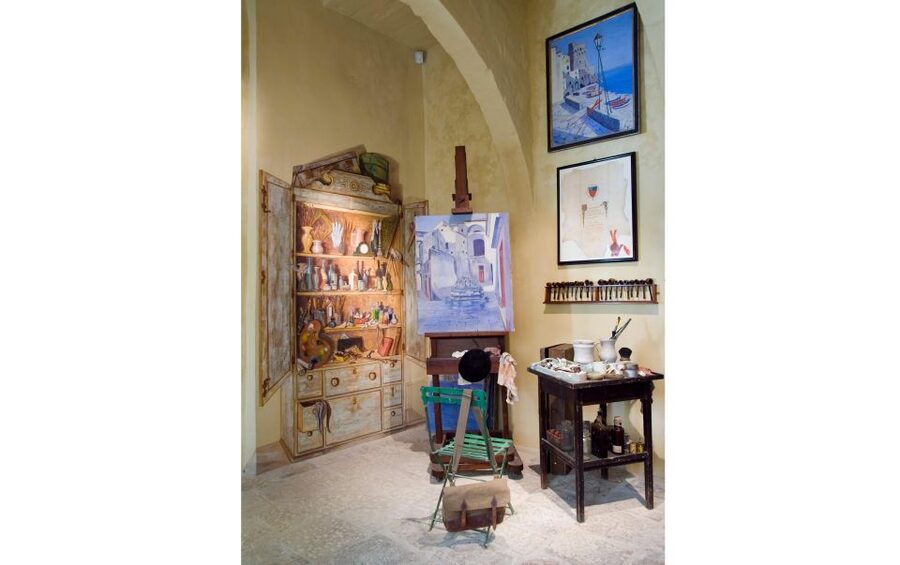
The museum includes a paintings collection with several significant 17th-century works, including works attributed to Mattia Preti, Jusepe de Ribera, Jakob-Ferdinand Voet, Charles Beale, and Juriaen van Streeck.
Even if you’re not hunting famous names, this is the part of the visit where the museum gives you a chance to compare styles and subjects across a single era. These attributions and names are clues to the quality and reach of the collection. It’s one thing to see paintings in general. It’s another thing to see that the house holds major European artists connected to the 1600s.
If you want a smart approach: spend a little longer here than you think you need. Painting rooms can become a blur if you rush, but in a house museum like this, stopping matters because the surroundings are part of the viewing.
The library and manuscripts: a quieter payoff
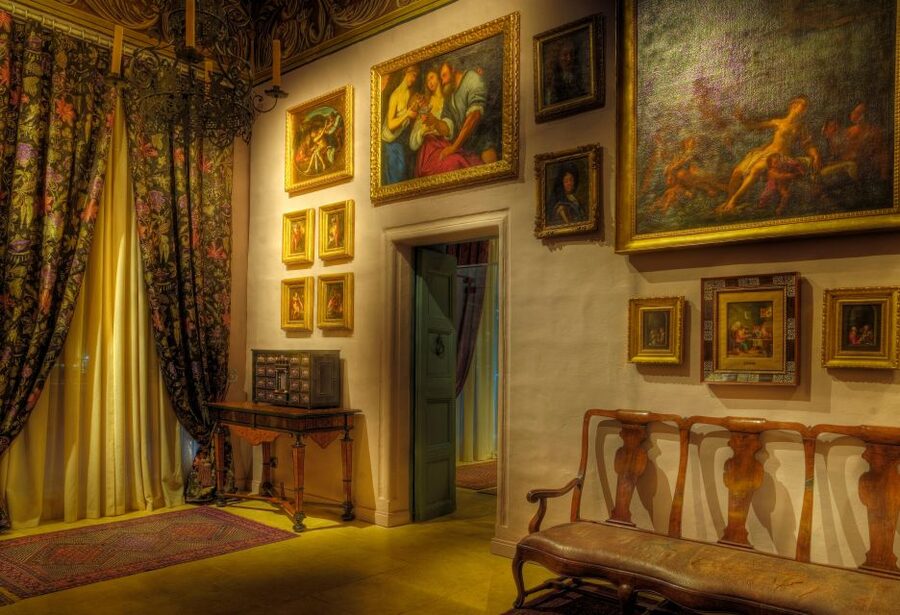
One of the most compelling mentions in the Palazzo Falson story is the remarkable library with over 4,500 books, plus valuable manuscripts. This is the category for book lovers and for anyone who likes learning that’s not shouted at you.
What makes it special is that it belongs inside a home-like setting. It’s not just “a room of books,” it’s part of the idea of Captain Olof Gollcher as a researcher, artist, and collector. If your museum day needs a breather, the library can give it to you, because you can slow down and focus on reading details at your own speed.
If you like to understand how a museum thinks, the library is a clue. The collection isn’t only visual. It’s intellectual.
Coffee and views on the upper terrace
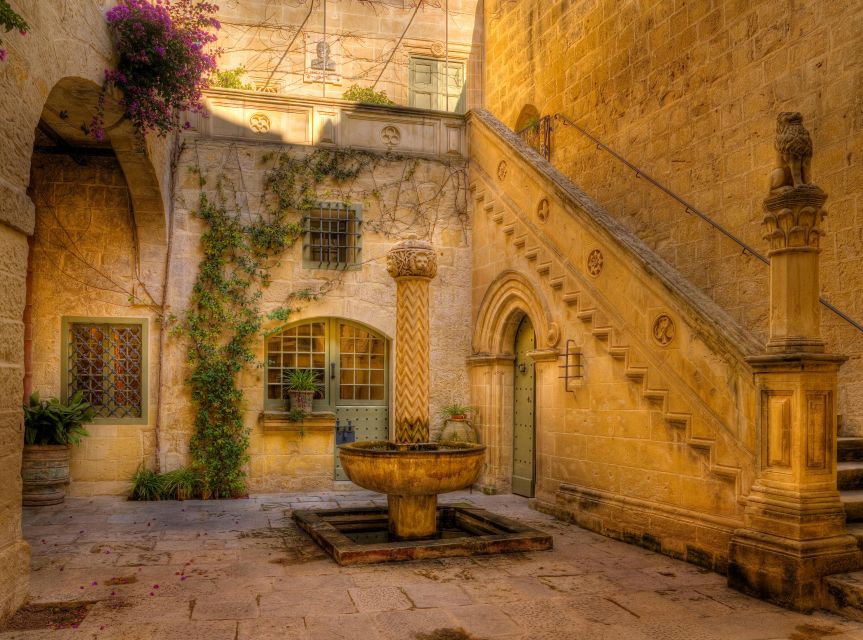
When you need a reset, head for the cafeteria on the terrace on the upper floor. From there you can enjoy magnificent views of Mdina and beyond.
This matters more than it sounds. After spending time with objects close-up, your brain needs distance. A terrace view gives you that without leaving the site. It’s also a nice way to end, so you finish with the wider world instead of walking out still mentally stuck in rooms.
Keep it simple: grab a drink, pause, and look back toward the city walls for orientation. Mdina is best understood from inside, and also best understood when you step back.
Practical tips for a smoother visit
A few choices can make your day feel easier, especially when a house museum is packed with objects.
First, use the audio guide. Since it’s offered in multiple languages, choose the one you can listen to comfortably without straining. The English option is listed, but French, German, Italian, Maltese, and Spanish are also available.
Second, don’t try to see everything in one sprint. The museum has 45 collections over 17 rooms, which means you’ll naturally hit repetition in themes like metalwork or textiles. Let that repetition work for you. You’re building an understanding of what the collector valued.
Third, take advantage of printed info if you prefer reading. The museum provides printed information in many languages, including Arabic, Chinese, Czech, Dutch, English, French, German, Greek, Hungarian, Italian, Japanese, Maltese, Polish, Portuguese, Russian, Slovak, Spanish, Swedish, and more. If you’re traveling with someone who reads labels better than they listen, the printed version can be a bridge.
Finally, plan your route around your interests. If you care most about painting, give those rooms longer. If you care most about craftsmanship, prioritize silver, furniture, jewellery, and armoury. If your day includes a museum fatigue moment, the terrace café is built in.
Who will love Palazzo Falson most
This museum suits you best if you like:
- House museums that feel personal and lived-in, not sterile
- Art plus objects, especially when categories are themed into rooms
- Slow travel, where you pause and read instead of passing through
It’s also a good choice if you want culture in Mdina without committing to a long outdoor walk. The palace layout is internal-courtyard focused, and the terrace gives you an outdoor break.
If you’re traveling with young children, remember it’s not suitable for children under 6, so plan accordingly.
Should you book the Palazzo Falson Historic House Museum ticket?
If you’re planning a day in Mdina and you want one ticket that delivers variety, this is a strong yes. For $15, you get access to a medieval palace with a large, categorized collection, an audio guide in multiple languages, and a built-in place to stop for coffee with views. It’s especially worth booking if you like 17th-century art, craftsmanship like silver and jewellery, and the idea of a collector’s mind made visible through rooms.
If you only want one or two big attractions and you hate museum overload, you might find the scale of 45 collections intimidating. In that case, go with a plan: listen to the audio guide first, then slow down only where your attention grabs you most.
FAQ
How much is the Palazzo Falson Historic House Museum entrance ticket?
The entrance ticket price is $15 per person.
How long is the ticket valid?
The ticket is valid for 1 day. You should check availability to see starting times.
Is an audio guide included?
Yes. An audio guide is included, with options in English, French, German, Italian, Maltese, and Spanish.
What languages are the printed materials available in?
Printed information is available in Arabic, Chinese, Czech, Dutch, English, French, German, Greek, Hungarian, Italian, Japanese, Maltese, Polish, Portuguese, Russian, Slovak, Spanish, and Swedish.
What can I see inside Palazzo Falson?
You’ll see collections across 17 rooms, including paintings, silver, furniture, jewellery, Oriental rugs, armoury, and a library with over 4,500 books and valuable manuscripts.
How many objects and collections are in the museum?
The collection includes over 3,500 objects and is organized into 45 specific collections spread across 17 rooms.
Is there anywhere to stop for a drink or snack?
Yes. There is a cafeteria on the terrace on the upper floor with views of Mdina and beyond.
Is the museum suitable for young children?
No. It is not suitable for children under 6 years.
Does the experience include an English host or greeter?
Yes. There is an English host or greeter.
Added recently in Mdina
- Shore Excursion: Private Full-Day Tour of Valletta & Mdina★ 5.0 · 4 reviews
- Private Tour in Malta Prehistoric Temples & Mdina★ 5.0 · 4 reviews
- 30-Minute Mdina Experience Audio-Visual Show Ticket (Open Ticket)★ 4.5 · 4 reviews
- Malta Shore Excursion: Private tour of Valletta and Mdina★ 4.5 · 8 reviews
- Mosta Crafts Village Mdina and Valletta Full Day Tour★ 3.5 · 8 reviews
- Mdina, Dingli cliffs and San Anton Gardens guided tour★ 3.5 · 14 reviews
- Valletta, Mosta and Mdina Night Tour★ 3.5 · 15 reviews
- Valletta & Mdina: Private Tour★ 4.5 · 16 reviews
Historical Tours, compared.

Prehistoric Temples, Limestone Heritage & Blue Grotto
Read our review →
Maltese Islands History Audio-Visual Show and La Sacra Infermeria Tour
Read our review →
Valletta: Self-Guided Historical Walking Tour (Audio Guide)
Read our review →
Wonderful Valletta, gastronomy, art, and history in the Mediterranean
Read our review →

Mdina: Private Historical City Walking Tour with Rabat Town
Read our review →
The Limestone Heritage Park and Gardens (Entry Ticket)
Read our review →Browse the lists this tour appears in