
Reviewed · MDINA TOURS
Private Tour in Malta Prehistoric Temples & Mdina
Malta goes way back here. You get prehistoric temple sites and then finish in Mdina, the fortified hill town that feels like a time jump in the other direction. The mix is exactly the kind of day that makes you see Malta as more than beaches and a pretty harbor.
I especially like how the tour pairs big names with small details. At Għar Dalam, you do not just look at ruins, you see animal bones displayed in Joseph Baldacchino’s Hall in a Victorian-style setting. And the tour is guided by someone who takes Malta personally. In one great run I heard about, the guide Ray was proud of his Maltese heritage and explained more than the obvious headline facts.
One thing to plan for: the day is weather-dependent and it runs about half a day, around 4 hours. Also, if you are sensitive to accents, note that the guide’s English can have an unusual accent for non-Maltese speakers, even though it is still communicated clearly.
Key Highlights You’ll Actually Feel on the Day
- A tight 4-site route that turns Malta’s prehistoric story into a timeline you can walk through
- Joseph Baldacchino’s Hall at Għar Dalam, where you see prehistoric bones presented in a classic Victorian style
- Hal Tarxien’s South Temple with the famous pleated-skirt statue figure in a decorated setting
- Hagár Qim to Mnajdra, two related temple sites with a clear sense of how the same community may have used them
- Mdina with no entry fee, giving you a relaxed finish in a fortified hill town
- Private group format, so your pace and questions stay yours
Why Malta’s Prehistoric Temples Plus Mdina Works So Well
Most “history days” in Malta do one thing well, either ruins or towns. This one stitches both together, and the result is more satisfying than you might expect.
You start with deep time, the kind of sites that make ancient Europe feel real fast. Then Mdina gives you a different kind of context. You are not just looking at artifacts anymore. You are seeing how Malta protected itself, how people lived on the hill, and how the town’s shape still tells a story.
I also like that the tour format is not exhausting. You get defined time at each stop, so you do not feel like you are constantly racing. It is structured: 45 minutes at Għar Dalam, 45 minutes at Hal Tarxien, then a longer 1.5 hours for the pair of Hagár Qim and Mnajdra, and finally 1 hour in Mdina.
That pacing matters. In archaeological parks, your enjoyment often comes from steady looking, not speed. And in Mdina, you want enough time to wander without feeling rushed back to the car.
Other temple visits:
- Gozo Full Day visiting Ggantija Temples, Salt Pans & Dwejra
★ 3.9 · 112 reviews - Hagar Qim temple (UNESCO) and Limestone Heritage guided tour
★ 3.5 · 11 reviews - Hagar Qim temple (UNESCO), Limestone Heritage & Marsaxlokk Market guided tour
★ 4.0 · 10 reviews
Valletta Pickup and the Practical Rhythm of a Private Tour
This tour is based in Valletta, with pickup offered and a start time of 9:00 am. Since it is private, you are not competing with other groups for space, photo stops, or guide attention. That is a real quality-of-life upgrade, especially at busy temple sites.
The driver is supposed to contact you once they are on their way to confirm your pickup location and destination. This is the kind of small detail that prevents stress. If your pickup spot is vague or you change plans late, you will want to keep the driver in the loop so the schedule can adjust.
The tour also uses a mobile ticket, so you are not juggling paper. The operator lists it as near public transportation, which is handy if you want a backup plan, though pickup is part of the experience.
Duration is listed as about 4 hours. In my view, that is perfect for combining two different travel moods: window into prehistory, then a calm finish in one of Malta’s most walkable historic towns.
Stop 1: Għar Dalam and Joseph Baldacchino’s Hall (Why Those Bones Matter)
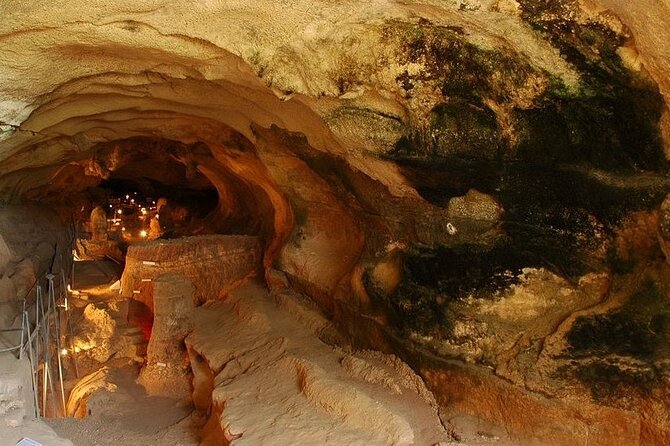
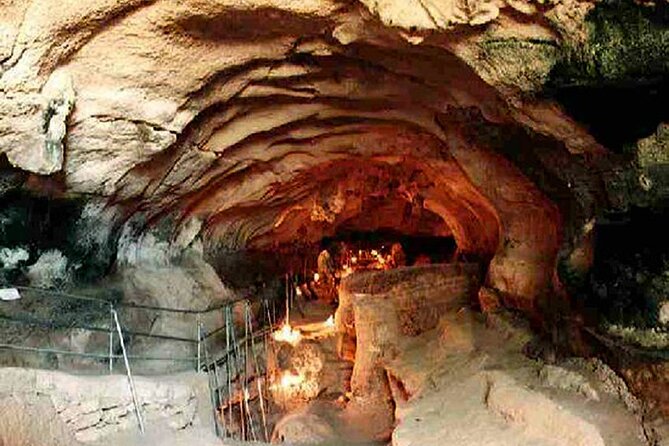
Għar Dalam is Malta’s oldest prehistoric site you will visit on this route. You are stepping into a place that has been tied to very early animal remains, and the visitor experience is designed to help you picture what you are seeing.
The big moment here is the display of ancient animal bones that were unearthed from the cave. Those remains are exhibited in Joseph Baldacchino’s Hall, which is described as one of a handful of Victorian-style displays in Europe that still survives in that form. Even if you are not an archaeology superfan, that presentation style helps your brain connect to the era when these discoveries were being collected and shown.
Why I think this stop is valuable: bones make prehistory feel less abstract. It is one thing to see “old stone.” It is another to see the preserved physical evidence of what people lived alongside and what the cave held.
Time-wise, you get about 45 minutes. That is enough to read the main context, look at the bone displays calmly, and ask questions without turning the site into a marathon.
If you are the type who likes to understand how information is presented, this hall is a good start. It sets a tone for the rest of the day, where you are looking at sites that have been discovered, studied, and interpreted over time.
Stop 2: Hal Tarxien Prehistoric Complex and the South Temple Statue
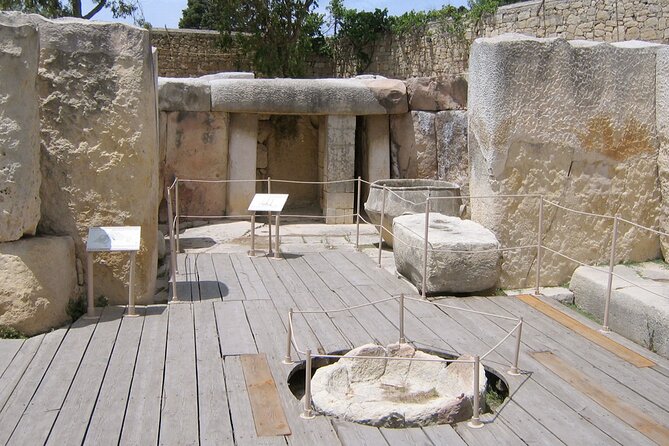
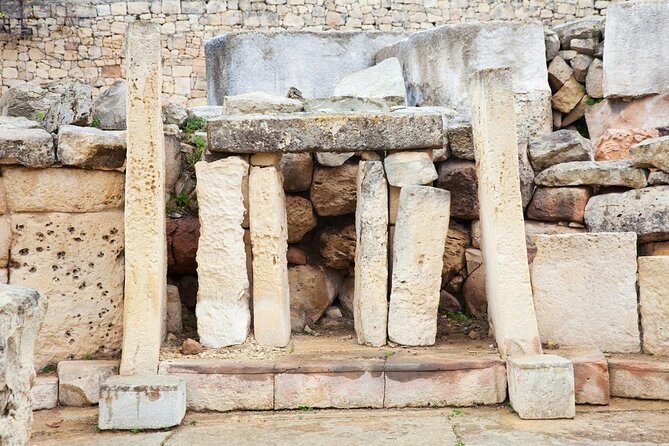
Next up is the Hal Tarxien Prehistoric Complex, specifically the area connected to the highly decorated South Temple. This is where you get the feeling of early builders not just working with stone, but shaping it for meaning.
You will see a colossal statue figure positioned like a guardian in front of the decorated space, including details like a pleated skirt. The site’s story also adds weight. It was discovered in 1913 by farmer Lorenzo Despott, and later work revealed that the complex originally involved four megalithic structures built in the late Neolithic, and then readapted during the Early Bronze Age.
That “readapted” detail is one of the most interesting ideas on the whole itinerary. It tells you these places were not abandoned after one era. They were re-used, reinterpreted, and fitted to new needs as communities changed.
Time is about 45 minutes again. That works here because Tarxien is visually dense. You will want time to look at the sculptural elements and then step back to connect them to the site’s timeline.
A possible drawback: if you prefer your history to be mostly political or mostly religious, this may feel more architectural and archaeological. But if you like how people built and how meaning is carved into stone, you will probably enjoy this stop more than you expect.
Other visits to Mdina:
- Mdina: Valletta Waterfront Area, Mdina, and Rabat Night Tour
★ 4.3 · 302 reviews - Malta: Rabat, Mdina, & San Anton Gardens Tour
★ 3.9 · 243 reviews - Mdina and Rabat – City Walking Tour
★ 5.0 · 215 reviews - Valletta, Mdina, and Mosta Night Tour with 5D Show
★ 3.9 · 90 reviews
Stop 3: Ħaġar Qim and Mnajdra, Two Sites, One Neat Flow
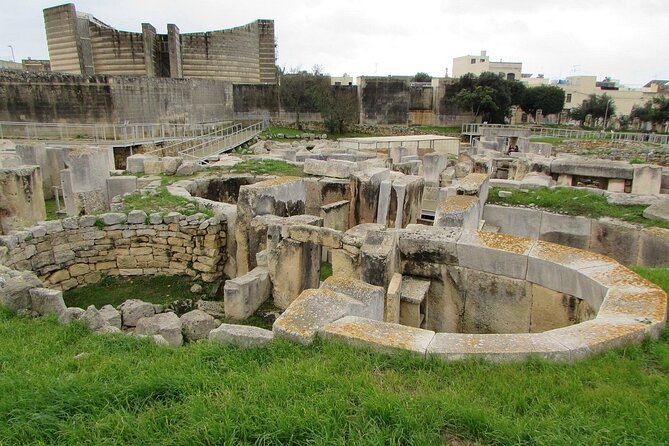
This is the longest stop on the tour at 1 hour 30 minutes, and it is earned. You visit Ħaġar Qim first, which is described as over 5,000 years old, then you continue to Mnajdra.
Ħaġar Qim sits on a promontory. The description is more than scenic, it sets the stage for understanding placement: there is a fertile plain to the east, and on the west the land slopes down toward the sea. That kind of setting matters because it affects how communities used the land and how they moved between routes.
Then you have a simple, concrete connection between the two sites: about 500 meters downhill from Ħaġar Qim, you find Mnajdra. The proximity is presented as a reason to think they were part of the same broader community life.
This is also where Mnajdra’s value comes in. It is not just another set of old stones. It is a near-by companion temple complex, “contemporary” in the way the tour frames it, suggesting related use rather than random construction.
Practical note: when a stop includes movement like a 500 meter downhill section, comfortable shoes help. You are not getting a hiking lesson, but you are not staying fully stationary either. I’d plan for some walking and uneven ground typical of archaeological parks.
If you are photo-minded, this portion can give you the best views because promontories and slopes naturally create perspective. Even if you do not take many pictures, the geometry of the landscape will help you understand why these buildings were set where they were.
Stop 4: Mdina, a Fortified Hill Town Finish (No Ticket Stress)

After the prehistoric sites, Mdina feels like a reward. You get 1 hour here, and the admission is free for this stop.
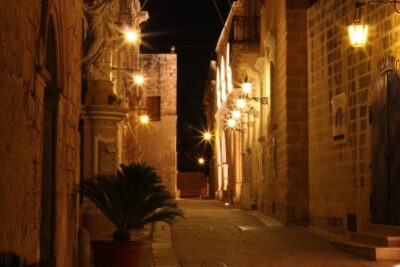
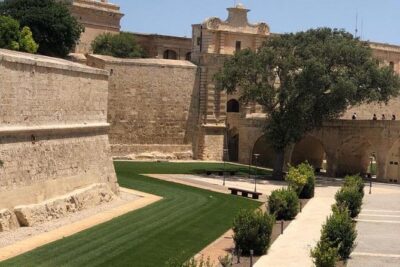
Mdina is one of Malta’s most popular destinations, and the tour explanation is accurate in the way it describes the town: it sits on a hill overlooking much of Malta, and the place feels compact and layered. You get tall bastion fortifications, centuries-old buildings that have been well maintained, and a sense of a town built to protect itself.
Why this ending works: it gives your day a calm landing. The ruins are about deep time and stonework. Mdina is about lived-in continuity. Even if the prehistoric sites are the headline, Mdina helps you understand how Malta’s geography shaped settlement and defense.
In that 1 hour, you can usually do a quick loop and still pause for a look back out over the views. The exact route is up to you, but I suggest you spend at least part of the time walking a perimeter lane or two. Mdina is not just about the big stops, it is about the way streets and walls hold the light.
If you want something to do after the tour ends, Mdina is also a handy place to keep exploring on foot.
Value and Price: What $331.37 Per Group Really Buys

The price is $331.37 per group, up to 2 people, and the tour runs about 4 hours. That can sound high if you compare it to standard group bus tours. But this is private, and you are paying for time, planning, and guide-led interpretation that you do not get on a crowded route.
Also, entrance is not the same across the whole itinerary. Għar Dalam and Hal Tarxien include admission tickets, and the Ħaġar Qim and Mnajdra stop includes admission as well. Mdina admission is free. That matters because it prevents the day from turning into a string of small add-on costs.
For two people, this format can actually be good value, especially if you care about learning something beyond what signs say. In one of the strongest experiences shared, the guide Ray was described as very knowledgeable and proud of his Maltese heritage, and he shared information beyond the obvious. That kind of extra explanation is where private tours earn their keep.
If you are traveling solo, the price will feel less friendly per person. If you are a couple, a pair of friends, or anyone who likes to move and ask questions at your own pace, it looks like a smart choice.
A small consideration: the tour is around half a day. If you want to spend the entire day at archaeological parks or you want a longer, slower Mdina wander, you might feel slightly compressed. But for most visitors, the balance is exactly right.
Guide Quality and Communication (Ray’s Example and What to Expect)

The guide role is central here because these sites can be visually impressive but intellectually heavy unless someone helps you connect the dots.
One of the standout praises attached to this experience was about Ray, described as very knowledgeable and proud of his Maltese heritage. The key point is not just that he knew facts, it is that he explained beyond what you came to see. If you like hearing how discoveries were made, why certain structures matter, and what “readapted” really implies, you will likely feel you got more than the basic rundown.
There is also a practical note. A review mentioned that the guide’s English has an unusual accent for non-Maltese speakers and should be more explicit about the actual time framing. Translation: you should be comfortable asking for clarification if you need it, and treat this as a half-day style program given its listed duration.
Even with that, the overall feedback points to the tour running smoothly and being easy to book and find. That smoothness matters on travel days when timing can make or break your mood.
Who This Tour Suits Best (And Who Might Skip It)
This works well for you if:
- You want a structured prehistoric route without needing to figure out logistics between sites
- You like archaeology that connects to the idea of communities and time periods, not just single monuments
- You appreciate a private guide who can answer questions and add context
- You want a half-day plan that still ends with a charming town walk
You might consider a different option if:
- You want a full-day deep focus at one site
- You prefer mostly indoor or mostly museum time, because at least part of the route includes outdoor archaeological walking
- You are highly weather-dependent. The experience requires good weather, so plan for flexibility in your schedule.
For families, most travelers can participate, but you should still treat the day as something that involves walking and outdoor site viewing. If you are bringing young kids, you may want to evaluate their patience for guided stops.
Quick Tips So You Enjoy Every Stop
A few practical moves can make the day feel smoother:
- Wear comfortable shoes for archaeological ground and the downhill connection between Ħaġar Qim and Mnajdra.
- Bring water and something light for sun. These sites are outdoors and timing does not include a long break.
- If your pickup location is tricky, be specific. The driver confirms your exact spot, and clear communication keeps things calm.
- If you want maximum learning, come with one question for each site. The tour format is tight, so asking something you care about makes the time count.
Should You Book This Private Malta Prehistoric Temples and Mdina Tour?
My take: yes, if you want the best of Malta’s “far back in time” story in a format that does not steal your whole day.
This is a smart choice for couples or small groups because it is private, guided in English, and ticketed for most stops. It also has a nice arc. You start with Għar Dalam’s bones in Joseph Baldacchino’s Hall, move into Tarxien’s South Temple and its pleated-skirt statue figure, then spend the longest time at Ħaġar Qim and Mnajdra where the landscape helps you understand the placement. You finish with Mdina, free entry, and an easy historic town wander.
The main reason to hesitate is weather or if you want more time than a half-day. If your schedule is flexible and you are excited by prehistoric architecture and archaeology, this tour is a strong buy.
FAQ
What is the duration of the Private Tour in Malta Prehistoric Temples & Mdina?
The tour duration is about 4 hours.
Where does the tour start?
It starts in Valletta, Malta, with a start time of 9:00 am.
Is pickup offered?
Yes, pickup is offered. The driver contacts you to confirm your location.
How many people are included in the tour?
It is a private tour, so only your group participates. The price is per group up to 2.
Are admission tickets included?
Admission tickets are included for Għar Dalam, Hal Tarxien Prehistoric Complex, and Hagar Qim & Mnajdra Archaeological Park. Mdina admission is free.
What language is the tour offered in?
The tour is offered in English.
Is the tour suitable for most travelers?
The tour notes that most travelers can participate.
Does the tour require good weather?
Yes. The experience requires good weather.
What is the cancellation policy?
You can cancel for a full refund up to 24 hours in advance.
Added recently in Valletta
- Tour of Malta (Private Driver) Including Lunch Platter & Wine in the countryside★ 4.5 · 3 reviews
- Valletta: Express Walk with a Local in 60 minutes★ 4.9 · 4 reviews
- Valletta Private Historical and Cultural Walking Tour★ 5.0 · 4 reviews
- Shore Excursion: Private Full-Day Tour of Valletta & Mdina★ 5.0 · 4 reviews
- Private Tour of the Maltese Island (Private Driver)★ 5.0 · 4 reviews
- Leisure Pass in Malta★ 4.0 · 4 reviews
- Valletta: Guided Walking Tour★ 3.8 · 5 reviews
- Malta: Private Picnic Cruise around Valletta & 3 Cities★ 5.0 · 5 reviews
Mdina Tours, compared.
Highlights of Malta & Mdina Full Day Tour with Lunch
Read our review →

Mdina, Dingli Cliffs and San Anton Botanical Gardens
Read our review →


Valletta: Vintage Bus to Valletta, Sliema, Rabat & Mdina
Read our review →
Mdina and Rabat Walking Tour inc. Catacombs and St. Paul’s Grotto
Read our review →Browse the lists this tour appears in