
Reviewed · WALKING TOURS
The Dark History of Valletta – Walking Tour
Valletta has a way of turning stone and stories into one strange mix, and this tour leans hard into that. You’ll walk through Malta’s capital while hearing dark tales, including the ghost of 16th-century knight Oliver Starkey partying in the 1990s, a lovesick letter that shows up right before a murder, and the grim rumor of over a hundred boys entering a church and never coming out. It’s dark history, told on foot in real streets, not in a classroom.
I especially love the way the guide’s storytelling feels highly structured and keeps you moving from scene to scene. Mario, the guide in the reviews, is described as an amazing storyteller who can build each story step by step, even ending with cliffhanger beats until you reach the next stop. Second, I like that the tour ends right in the center near the Grand Master’s Palace, so you can roll into dinner or a drink with almost no extra planning.
The only catch is physical. Valletta is hilly, and this walks you down and then back up, so you’ll want to be mobile and comfortable walking on uneven ground.
Key points before you go
- Dark legends with real street context: You hear eerie stories tied to what you can actually see around you in Valletta.
- Mario’s pacing and cliffhangers: Stories are pieced together in a way that makes time fly.
- A route that finishes in the action: The walk ends near Grand Master’s Palace, ideal for an easy post-tour meal.
- Small group size: Maximum 35 people helps keep things personal enough for a real conversation.
- English tour with a mobile ticket: Quick to access, and you avoid hunting for printed vouchers.
- Plan around hills and weather: Good walking shoes matter, and the tour depends on decent conditions.
Dark history in Valletta, and why it works on foot
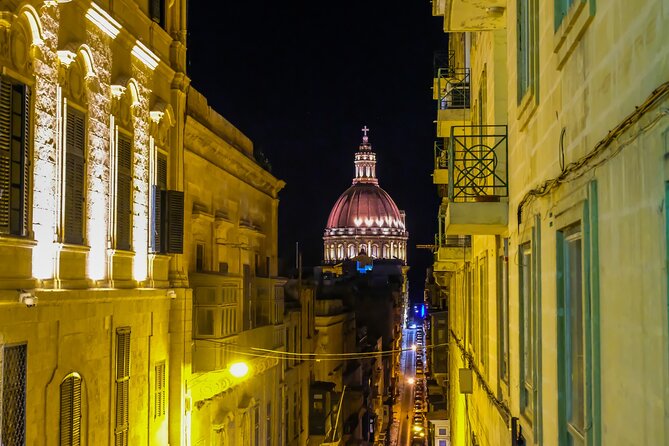
This tour is built around an idea that makes sense in Valletta: the city is already theatrical. Fortifications, churches, and statues all invite a second reading, and you get it by hearing the darker side of what people say happened here. Instead of a dry lecture, you’re getting short, punchy stories that match the pace of walking through a real historic core.
You’ll also notice the tour isn’t only spooky for entertainment. It nudges you to think about how myths stick, how rumor becomes legend, and why certain images and names show up again and again in a place like this. That turns the walk into something more useful than jump scares. It helps you see the city with fresh eyes, even if you’ve already been to Valletta before.
And the format helps. You get about two hours, which is long enough to cover a meaningful stretch, but short enough that you’re not stuck when your legs start to protest the hills. The group stays capped at 35, so it doesn’t turn into a herd moving at one slow speed.
A few more Malta options to weigh up
- Maltese Islands History Audio-Visual Show and La Sacra Infermeria Tour
★ 4.0 · 344 reviews - Wonderful Valletta, gastronomy, art, and history in the Mediterranean
★ 4.5 · 72 reviews - The Food & History Private Tour of Malta
★ 4.5 · 44 reviews
Getting started at Tritons Fountain, then finding your rhythm
The meeting point is Tritons’ Fountain, right by Vjal Nelson in Il-Furjana (use the nearby pin if you’re navigating). This is a helpful start because it’s recognizable and central enough for most arrival strategies in Malta. You’ll want to arrive with a bit of buffer, since Valletta streets can be busy and you’ll be setting off on foot soon after.
This first phase is where I’d focus on two practical things: footwear and energy level. The route includes downhill segments and then a climb back up, and that matters more than you might expect until you’re doing it. If your plan includes another big site after the tour, consider this the anchor of your day.
Once you’re with the group, the guide’s job is to give you a sense of where you are in the city’s story. In the reviews, Mario is praised for engaging storytelling and for keeping people on track even when schedules get messy. That matters because you’re dealing with a city where events, traffic, and late arrivals can happen. You don’t want a tour that falls apart the moment someone is late.
Oliver Starkey in the 1990s, how legends cross time
One of the standout themes you’ll hear is the ghost of Oliver Starkey, a knight from the 16th century who is said to have thrown parties in the 1990s. That sounds like pure horror comedy, but the value is in how the story is framed while you walk. You’re not just hearing a spooky name. You’re hearing a legend that claims the past can leak into the present.
This kind of tale does two useful things for you as a visitor. First, it gives Valletta personality. The city feels less like a museum and more like a place where people still talk, worry, and invent explanations. Second, it trains your eye. When your guide points out references overhead or nearby, you start noticing details you’d otherwise walk past.
You’ll also hear how Oliver Starkey was eventually persuaded to stop disturbing neighbors. That detail matters because it turns the ghost story into a social one. It’s about boundaries, community, and the uncomfortable idea that even the invisible can cause trouble. As you move, listen for the way the story connects to the surroundings, not just to the supernatural.
The lovesick letter and the streets right before a murder
Another story centers on a lovesick man sending a letter to his lover shortly before he murdered her. This is classic dark-tale material, but the tour’s strength is that it doesn’t treat the letter as just plot. The guide uses it to create a sense of timing and motive, which is exactly what you need when you’re hearing multiple stories in a row.
For you, the practical payoff is focus. When stories are anchored in a specific moment, they stay in your head longer. You’re less likely to remember Valletta only as stone and more likely to remember it as characters moving through real spaces. That’s the difference between a generic walk and something that changes how you remember a city.
If you like narrative tours, this part is likely to click. The guide’s pacing is described as engaging and fast, with cliffhanger moments that keep you walking until the next stop. So you’re not just hearing the end of a tragedy, you’re also being guided through how it feels to approach it, piece by piece.
Other walks around Malta:
- Valletta: Guided Walking Tour with Optional Cathedral Tour
★ 4.3 · 758 reviews - The Valletta Street Food and Culture Walking Tour
★ 5.0 · 711 reviews - Valletta Private Walking Tour
★ 5.0 · 163 reviews - Three cities walking tour incl. entrance to Inquisitor’s palace
★ 5.0 · 65 reviews
Over a hundred boys and the church nobody forgets
The tour also includes a grim legend of over a hundred boys entering a church but never coming out. Even if you treat it as folklore, the story has weight. Churches and sacred spaces tend to accumulate meaning over time, and people often attach fear to places that feel powerful or hard to interpret.
This section is valuable because it helps you read the city’s emotional geography. Valletta isn’t just about grand architecture. It’s also about communal memory, the kind people carry in whispers and symbols. When your guide points out the church context and the darker thread connected to it, you start to understand why certain images and spots feel charged, even to people who don’t know the full backstory.
One more reason I think this works on foot: you can see how stories might have spread. Valletta’s streets make it easy to pass along rumors, connect names, and retell fragments. You’re moving through a place where story travel is natural, so the legend feels less random and more plausible as cultural behavior.
Jean de Valette and the meaning behind what you see overhead
You’ll also learn the truth about Jean de Valette, the founder of Valletta’s capital. That matters because it adds grounding. Dark tales are fun, but you’ll enjoy this more when you also get to balance them with the historical foundation of the city’s identity.
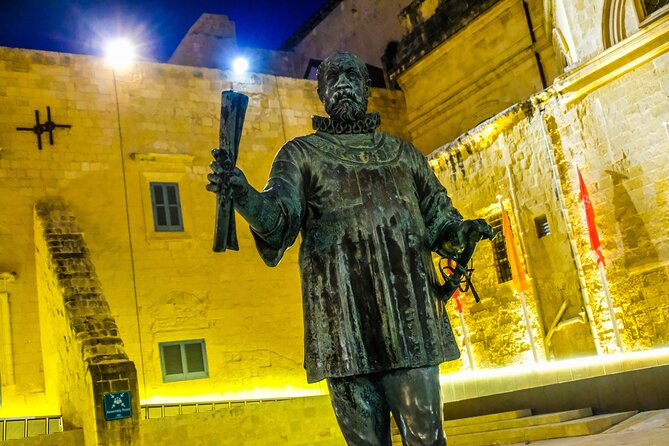
This part of the walk is where you’ll likely start looking up. The tour includes hidden meanings behind a grotesque statue that watches over people in Valletta from above. That detail is exactly what makes a walking tour worth your time. You’re not only hearing a story, you’re also training your senses to notice one of the city’s visual prompts.
If you’re the type who loves symbolism, this is one of the best stretches. Grotesques often serve as warning, reminder, or statement, and the idea here is that the statue is doing more than just decorating. As you stand where your guide suggests, you’ll understand why that overhead view feels like it has a job, not just a look.
Two hours on hilly streets, and what to wear for success
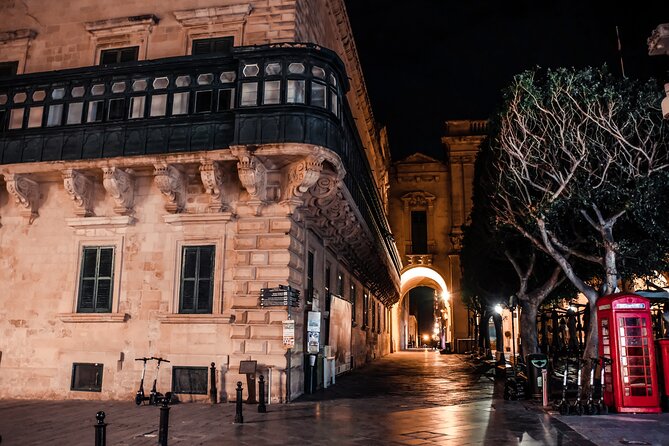
This is an approximately 2-hour walking tour in English. It’s designed for most travelers, but the reviews make the reality clear: Valletta is very hilly. You’ll walk down and then back up. That doesn’t mean it’s impossible. It means you should treat it like an active city stroll, not a sit-and-spectate outing.
So I’d plan around a few basics:
- Wear comfortable walking shoes with grip.
- Bring a small water bottle if you’re touring in warm months.
- Keep your phone charged, since the tour uses a mobile ticket.
- Use the meeting point as your anchor, then stay with the group so you don’t get separated on side streets.
The pacing also matters for your enjoyment. One review highlights that even when the family arrived late due to traffic caused by an event, the guide, Mario, called to check and then kept the group engaged by sharing other stories while they waited. That tells me the tour has a plan for real life interruptions, which is good news for anyone who doesn’t want to feel rushed or left behind.
Price and value: what $24 buys in the real streets
At about $24.03 per person, this tour lands in the budget-friendly range for a guided, story-driven experience. For me, the best way to judge this price is not only cost, but what you get for the time you spend. You’re paying for:
- a trained guide with a strong narrative style,
- an easy meeting-to-ending route through Valletta’s center,
- and a compact two-hour window that gives you multiple memorable stories.
You’re also not paying for museum-style entry fees, since the included information notes admission ticket free. That helps you keep your day organized. If you’re already planning other stops in Valletta, this tour can act like a narrative primer, making later sights easier to interpret.
The small-group cap of 35 also supports the value. It’s still big enough to run smoothly, but small enough that you’re not completely anonymous to the guide. If you like asking quick questions and getting answers tied to what you’re seeing, this size helps.
Where this tour fits in your Valletta day
This ends near the Grand Master’s Palace, right in the heart of Valletta close to places to eat and drink. That makes it a great mid-day or late-afternoon activity, depending on your stamina. If you’re doing a longer list of sites that same day, consider doing this earlier, while you still have the energy for hills.
If you’re the kind of traveler who likes to get oriented through stories, this also works well as your first big walk. Hearing about Jean de Valette and noticing the statue overhead gives you a mental map that stays with you. Then later, when you pass churches and grand facades, you’ll remember the darker context your guide shared.
If you’re traveling with limited time, the two-hour length is another plus. It’s long enough to feel like a proper guided experience, but not so long that you have to treat it like a whole afternoon.
Should you book the Dark History of Valletta walking tour?
Book it if you want Valletta to feel like a living city with characters, not only a list of sights. The tour’s biggest strength is the storytelling style, with Mario specifically praised for being engaging and able to piece stories together with momentum.
Skip it if you have trouble with hilly walking. The walk includes down and back up, so pick your footwear carefully and be honest about your comfort level. Also, since it depends on good weather, have a flexible plan around outdoor time.
If you’re looking for a value-priced, narrative walk that ends where the action is, this one is a solid choice. It’s the kind of tour that helps you notice details you would otherwise miss, like the grotesque statue watching from overhead and the historical anchor of Jean de Valette.
FAQ
How long is the Dark History of Valletta walking tour?
It lasts about 2 hours.
Where does the tour start and end?
It starts at Tritons’ Fountain, Vjal Nelson, Il-Furjana, Malta. It ends at the Grand Master’s Palace in Valletta, Malta.
What language is the tour offered in?
The tour is offered in English.
Is the ticket mobile or do I need something printed?
You use a mobile ticket.
How big is the group?
The tour has a maximum of 35 travelers.
Is it suitable for most people?
Most travelers can participate, but you should be prepared for hills because the walk includes going down and then back up.
What happens if the weather is bad?
This tour requires good weather. If it is canceled due to poor weather, you’ll be offered a different date or a full refund.
Can I cancel for free?
Yes, you can cancel for a full refund if you cancel up to 24 hours in advance of the experience start time.
Added recently in Malta
- Valletta City of Gentlemen guided walking tour★ 3.5 · 3 reviews
- Reggae Sunset Cruise in Malta★ 4.5 · 3 reviews
- Sensory Coffee Master Class: A Unique Island Experience★ 5.0 · 4 reviews
- Truffle Making Master Class★ 4.5 · 5 reviews
- Valletta’s Hidden Minds: Self-Guided Psychological Puzzle Walk★ 4.0 · 6 reviews
- Victoria Lines Tour★ 5.0 · 8 reviews
- Valletta: Private Massage from a world renowned masseuse★ 4.6 · 9 reviews
- Private Walking Tour of Vittoriosa /3 Cities★ 5.0 · 9 reviews
Walking Tours, compared.

Valletta: Street Food and Culture Walking Tour
Read our review →
Valletta: Guided Walking Tour with Optional Cathedral Tour
Read our review →
The Valletta Street Food and Culture Walking Tour
Read our review →Browse the lists this tour appears in