
Reviewed · HISTORICAL TOURS
Heritage Pass in Malta
If you want Malta in a hurry, this Heritage Pass is interesting because it stitches together prehistoric temples, Roman remains, early Christianity, and wartime forts, all with Valletta as your base. I like that you’re getting 20+ major sites with one ticket, not a pile of separate entries. One drawback to keep in mind: you still need to check opening times for each stop, since some sites can be closed at short notice.
I also like the “get on, get off” freedom built into this pass, especially when your legs are tired of stone steps. The included cruises come with free Wi-Fi on board, which sounds small, but it helps you plan the next move while the boat is moving. Just remember the pass can be a little confusing at first, so take a few minutes to understand your QR codes before you start hopping around.
Quick hits before you go
- 20+ heritage entries included across forts, catacombs, temples, and museums
- Hop-on hop-off bus access plus harbor cruise and coastal route included
- Free Wi-Fi on the cruises, handy for navigating and checking hours
- Valletta plus the wider island approach, so you are not stuck in one neighborhood
- Many stops are free once inside, so you can spend more time looking and less time paying
Price and value: what you are really buying for $92.69
At $92.69 per person, the Malta Heritage Pass is priced like a “packaged day of sightseeing,” not like a single museum ticket. You are paying for the convenience of bundling multiple entrances, plus transport that lets you jump between Valletta, the harbor area, and the island’s most famous ancient sites.
The biggest value comes if you actually use enough of it. If you only visit a couple of sites, it can feel like you overpaid. If you commit to hitting a long list over your days in Malta, it starts to make sense fast, because you’re covering headline places like Fort St Elmo and St Paul’s Catacombs along with the megalithic temple circuit.
There’s also a practical value angle that is easy to miss. The pass is designed to help you move efficiently. You are not just collecting stamps, you are building a route that links areas of the island, which matters on Malta where a “quick hop” can still take time.
A few more Valletta options to weigh up
- Valletta: Self-Guided Historical Walking Tour (Audio Guide)
★ 3.7 · 251 reviews - Hagar Qim temple (UNESCO) and Limestone Heritage guided tour
★ 3.5 · 11 reviews - Hagar Qim temple (UNESCO), Limestone Heritage & Marsaxlokk Market guided tour
★ 4.0 · 10 reviews
Your best 3-day plan: Valletta first, then prehistoric Malta
The pass is described as a 3-day experience, and the operating hours listed run 8:00 AM to 6:00 PM. Plan around that. Start early, take a longer lunch, and save the most time-consuming sites for mornings when you are sharper.
A smart way to structure it is:
- Day 1: Valletta and the immediate harbor defenses
- Day 2: Temples and caves on the main island
- Day 3: Catacombs plus the south coast temple stops, then use your coastal route for Comino and Gozo if you still have energy
Because the included entrances are “one hour” type visits at many stops, you can build a full day without feeling like you’re speed-running Malta. But you may not fit every stop on the list in exactly three 24-hour periods, so I’d pick based on your interests.
Fort St Elmo, MUŻA, and Valletta’s power rooms
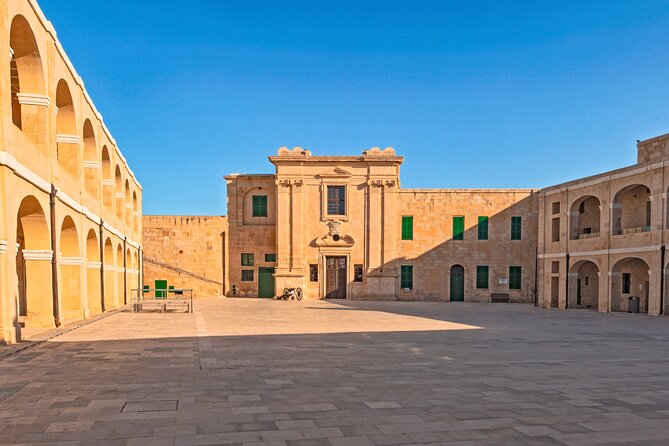
Start with Fort St Elmo, because it is one of the clearest “why Malta mattered” sites on the whole island. This star fort sits at the seaward shore of the Sciberras Peninsula and commands the entrances to both harbors. It’s famous for its role in the Great Siege of Malta of 1565. Even if you’re not a battlefield nerd, it’s one of those places where the setting does half the explaining.
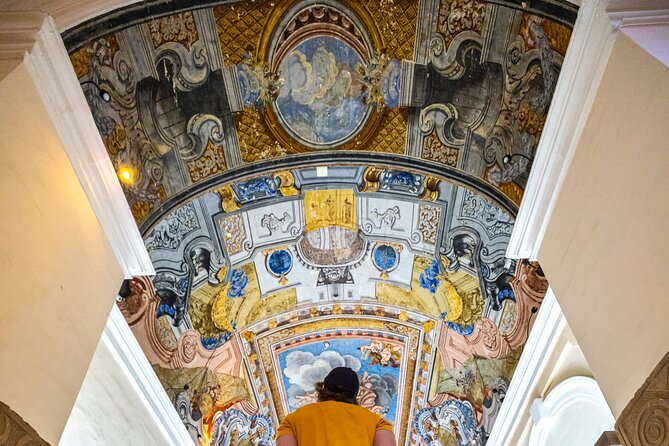
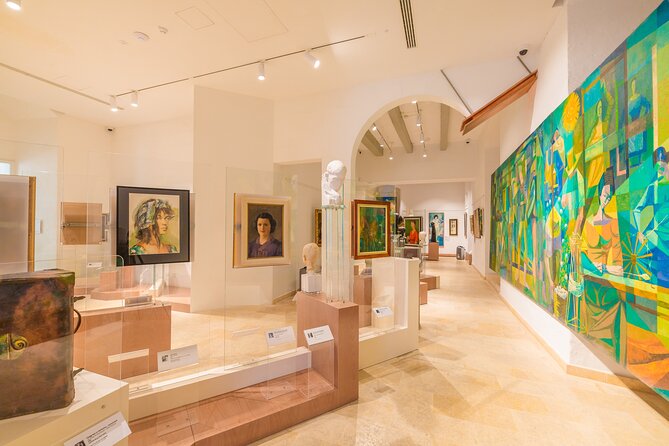
Next up, head to MUŻA (The Malta National Community Art Museum) at Auberge d’Italie. This museum is tied to Valletta’s grand buildings and shifting museum history, and it focuses on works by Maltese and foreign artists across major European styles. You get a nice change of pace after fortifications, and the building itself helps the visit feel “inside Valletta,” not just “stopping in Valletta.”
If you want the Valletta grandeur side in a single stop, plan time for the State Rooms at the Presidential Palace area. This is tied to Valletta’s World Heritage story, starting soon after the 1566 founding of the city. Just know there can be occasional short-notice closures, so if this is a must, don’t leave it as your only plan for that day.
Then hit the Palace Armoury for the Order of St John vibe. It focuses on the opulence and military world of the knights, with armor connected to Grand Masters Alof de Wignacourt and Jean de la Valette, plus Ottoman armor and weapons, and a selection of artillery pieces. If you like objects you can really picture being used, this is a strong one-hour stop.
Tip: if you are doing multiple indoor sites on the same day, pace yourself. Fort St Elmo, MUŻA, and the Palace Armoury are all satisfying, but they all reward time spent looking closely, not rushing through.
Temples and caves: Ta’ Ħaġrat, Skorba, Hal Tarxien, and Għar Dalam
Malta’s prehistoric temples are the reason many people come, and this pass gives you enough coverage to build a temple-and-cave day.
Begin with Ta’ Ħaġrat Temples in Mġarr. It’s a UNESCO World Heritage Site with the kind of deep time that makes normal history feel shallow. The larger temple dates to the Ġgantija phase (3600-3200 BCE), and the smaller is tied to the Saflieni phase (3300-3000 BCE). It’s also among the world’s oldest religious sites, so even a short visit can feel like you stepped into a time machine.
For a different flavor of prehistory, go to Għar Dalam Cave and Museum near Birżebbuġa. This is a 144 metre long phreatic tube, and it contains bone remains of animals that were stranded and then became extinct in Malta at the end of the Last Glacial Maximum. If you want your ancient Malta to include science and fossils, this is a great counterbalance to the temple sites.
If you want to connect the temple story across multiple sites, include Skorba Temples on the northern edge of Żebbiegħ. Skorba has UNESCO status too, and it’s notable for the fact that it was excavated in the early 1960s, later than some other megalithic sites studied since the early 19th century. That gives it a different “archaeology timeline” feel.
Another high-impact stop is Hal Tarxien Prehistoric Complex. It has three attached temple structures. The main entrance is a reconstruction from 1956, and many decorated slabs found on site were relocated indoors for protection at the Museum of Archaeology in Valletta. This is one of those places where you’ll understand why preservation matters, even if you just see the site itself.
Same islands, a different way to spend the day:
- From Malta: Full-Day Gozo UTV Tour with Lunch and Boat Ride
★ 4.6 · 4,408 reviews - The Original Valletta Walking Tour
★ 5.0 · 2,719 reviews - Valletta: 3-Hour Walking Tour
★ 4.7 · 1,605 reviews - From Malta: Full-Day Gozo Quad Tour with Lunch and Boat Ride
★ 4.8 · 1,419 reviews
Birgu’s harbor world: Fort St Angelo and Malta Maritime Museum
When you’re ready to swap “ancient land” for “Malta at sea,” Birgu is the move.
Start with Fort St Angelo, a bastioned fort at the center of the Grand Harbour. It started as a medieval castle called Castrum Maris, then the Order of St John rebuilt it as a bastioned fort between the 1530s and 1560s. It’s best known as the Order’s headquarters during the Great Siege of Malta. From here, you can almost see how defense and harbor control shaped daily life.
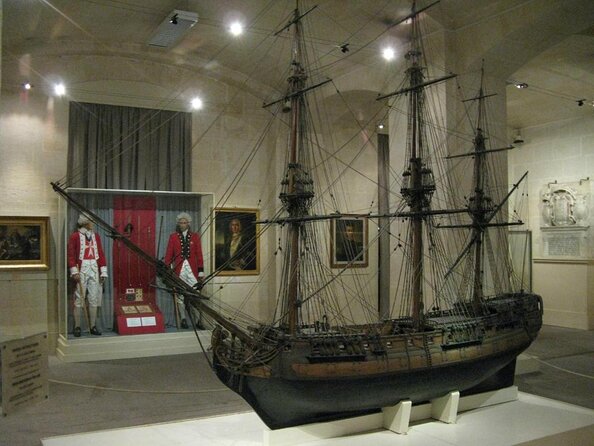
Then spend your time at the Malta Maritime Museum, housed in the former Royal Naval Bakery built in the 1840s for the Mediterranean Fleet. The collection is described as having over 20,000 artifacts, making it the largest museum on the island. The museum’s focus runs from prehistory to the present in a Mediterranean and global context, so you get sea history without it turning into a narrow lecture.
If you like museums where the building itself feels like an artifact, this one lands well.
South coast megatemplves: Ħaġar Qim, Mnajdra, and the limestone details
For pure Malta “wow, that’s old” factor, plan your south coast stops on a day when you can move at a calm pace.
Include Ħaġar Qim & Mnajdra Archaeological Park. These are on the southern edge of Malta on a ridge capped in soft globigerina limestone. The builders used this stone throughout the temple architecture, and the site descriptions get technical in a helpful way, because understanding the limestone makes the architecture make more sense. You are also seeing one of the most iconic ways Malta’s geology and human building choices line up.
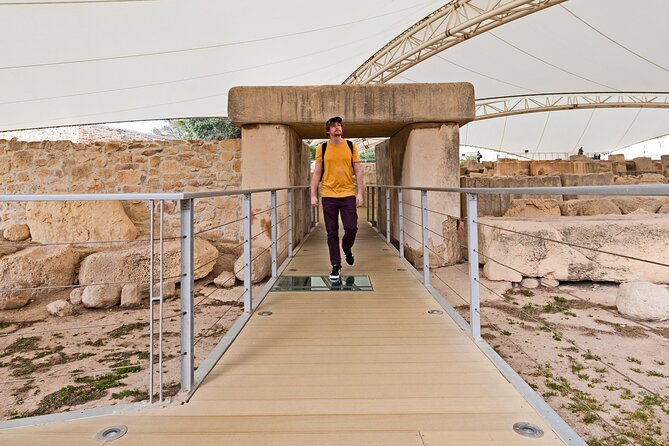
For the other half of that duo, add Mnajdra Temples itself. Mnajdra is about 497 metres from Ħaġar Qim and dates to around the fourth millennium BCE. In 1992, UNESCO recognized Mnajdra and other Maltese megalithic structures. The park also includes work completed on a protective tent in 2009, which matters because weather can be tough on stone and you’ll see structures preserved under modern protection.
Practical tip: these sites are outdoors. Even with a pass that speeds up your entry, your actual time will be shaped by sun, wind, and your stamina on uneven ground.
St Paul’s Catacombs and Roman Malta: when religion goes underground
If you want your history to get personal and literal, go to St Paul’s Catacombs. These are tied to early Christianity archaeology and include an underground system of galleries and tombs dating from the third to the eighth centuries CE. The site is managed by Heritage Malta, and the descriptions emphasize that there are over 30 hypogea in the wider St Paul’s and St Agatha’s complex, with 20 open to the public.
This stop can surprise you, because it’s not a decorative museum. It’s a physical reminder that people lived, feared, prayed, and buried in the same ground we walk over today.
Right after that, consider Domvs Romana, which looks at the private life of an ancient Roman aristocrat. The domus itself is only partly recovered, but the mosaics and surviving artifacts show the original richness of the dwelling. This is a good “Roman reality check” between the underground Christian world and the prehistoric temple world.
Planning Comino and Gozo with the coastal pass route
One of the nicest things about this pass is that it’s not only Malta the island on land. You also get a coastal pass route to Comino and Gozo.
For your schedule, treat the day trip as a “time anchor.” Once you commit to a cruise route, build fewer land stops around it. If you try to do six indoor sites on the same day as a boat day, you’ll feel rushed, and rushing is how you miss the good stuff.
You’ll also appreciate that the harbor and coastal options include free Wi-Fi on board. That can help if you’re changing plans on the fly, checking what time you want to return, or confirming you’re at the right stop next.
Cruises, Wi-Fi, and the bus-stop reality
The pass includes a harbor cruise of Valletta and the Three Cities, and those cruises have free Wi-Fi on board. That Wi-Fi isn’t just a convenience. It helps you keep your day from turning into guesswork, especially when you are bouncing between Valletta viewpoints and stops along the coast.
Now, here’s the practical side. The hop-on hop-off system is useful, but it isn’t magic. You need to know where the buses stop at each area, or you can waste time looking for the correct pick-up point. Also, don’t assume every “pickup” will feel like a hotel shuttle. This is a public route model, so arrive early at the stops you want and be ready to wait.
If you care about comfort, one note to keep in mind is that bus cleanliness can vary, even when drivers are helpful and patient. I’d bring a water bottle and keep the day lightweight.
Who should book this pass, and who should pay as you go
This pass is a great fit if you are:
- Planning to visit a lot of sites and want them bundled
- Staying in or near Valletta and want the route to carry you
- Interested in mixing prehistoric temples, wartime forts, and underground Christian archaeology
- The kind of person who likes building a multi-stop day plan instead of only doing one museum
It might not be your best choice if you:
- Prefer to pick 2 to 4 sites maximum, then relax
- Don’t want to manage QR codes and opening-time checks per stop
- Expect perfect “show up and everything is open” certainty, every day, every time
A very honest way to think about it: if your itinerary naturally lands on 15 to 20 included sites, the math tends to work. If you’ll only use a handful, paying as you go could be less hassle.
Should you book the Heritage Pass in Malta?
I think it’s worth booking if you want a structured, high-input way to see Malta’s main historical eras without building a complex ticket plan. The standout value is the mix of headline sites like Fort St Elmo and St Paul’s Catacombs plus the megalithic temple stops, all tied together with hop-on hop-off bus and cruise time.
Just go in with eyes open. Plan early starts, check opening times via the QR process before you commit your day, and don’t assume every site will be open at the exact moment you arrive. If you do that, this pass can turn Malta into a clear, doable route instead of a list of distant places you never quite got to.
FAQ
Where does the Malta Heritage Pass operate from?
The pass is based in Valletta, Malta and is designed to connect you with sites across the island, plus harbor and coastal cruise routes.
How much is the Heritage Pass?
The price is listed as $92.69 per person.
How long does the experience last?
The experience is described as 3 days (approx.).
What major attractions are included?
The pass includes access to sites such as Fort St. Elmo, St. Paul’s Catacombs, and the Hagar Qim and Mnajdra areas, along with many other heritage stops.
Does the pass include buses and cruises?
Yes. It includes unlimited use of the hop-on hop-off bus, a harbor cruise of Valletta and the Three Cities, and a coastal pass route to Comino and Gozo.
Is Wi-Fi included on board?
Yes. The cruises offer free Wi-Fi on board.
What are the opening hours for the included sites?
The listed opening hours are 8:00 AM to 6:00 PM, Monday through Sunday.
Is there free cancellation?
Yes. You can cancel for a full refund up to 24 hours in advance of the experience start time.
Do I need good weather for this experience?
Yes. The experience requires good weather. If it’s canceled due to poor weather, you will be offered a different date or a full refund.
Added recently in Valletta
- Tour of Malta (Private Driver) Including Lunch Platter & Wine in the countryside★ 4.5 · 3 reviews
- Valletta Private Historical and Cultural Walking Tour★ 5.0 · 4 reviews
- Valletta: Express Walk with a Local in 60 minutes★ 4.9 · 4 reviews
- Shore Excursion: Private Full-Day Tour of Valletta & Mdina★ 5.0 · 4 reviews
- Private Tour in Malta Prehistoric Temples & Mdina★ 5.0 · 4 reviews
- Private Tour of the Maltese Island (Private Driver)★ 5.0 · 4 reviews
- Leisure Pass in Malta★ 4.0 · 4 reviews
- Valletta: Guided Walking Tour★ 3.8 · 5 reviews
Historical Tours, compared.

Prehistoric Temples, Limestone Heritage & Blue Grotto
Read our review →
Maltese Islands History Audio-Visual Show and La Sacra Infermeria Tour
Read our review →
Valletta: Self-Guided Historical Walking Tour (Audio Guide)
Read our review →
Wonderful Valletta, gastronomy, art, and history in the Mediterranean
Read our review →

Mdina: Private Historical City Walking Tour with Rabat Town
Read our review →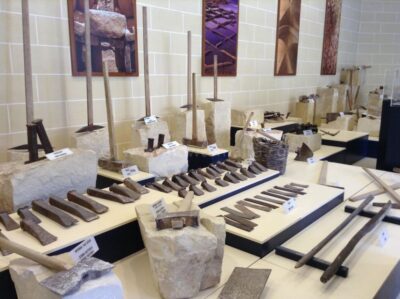
The Limestone Heritage Park and Gardens (Entry Ticket)
Read our review →Browse the lists this tour appears in