
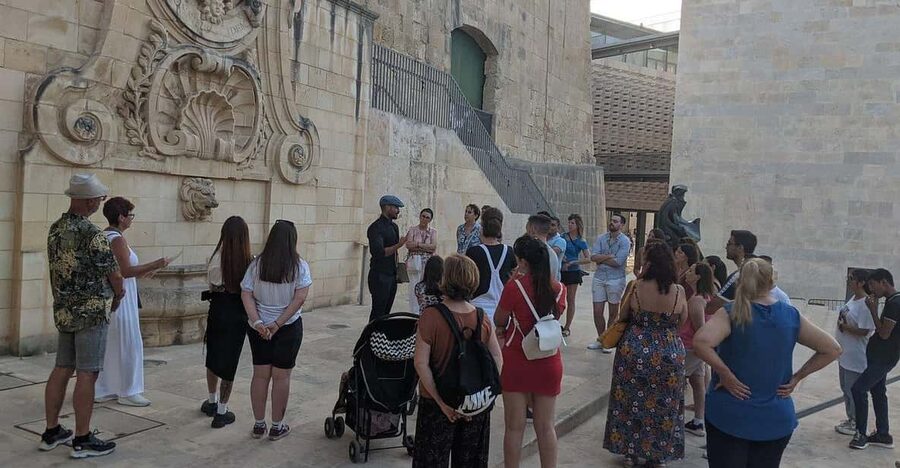
Reviewed · WALKING TOURS
The Grand Tour of Valletta: A walking tour of Valletta.
A stroll through Valletta feels like stepping into a fortified story, built after the Great Siege of 1565 and later nearly knocked apart during World War II. I love how this walk keeps you moving through key corners of the city, so you get the big picture without getting stuck in one museum line.
I also like the theatrical storytelling style, with guides such as Rafa and Leila turning the Knights of Malta era into something you can actually picture. The one drawback to consider is that the pace is efficient, so some stops are short, and you will not get long, ticketed museum time as part of the tour.
Key highlights you will feel from the start
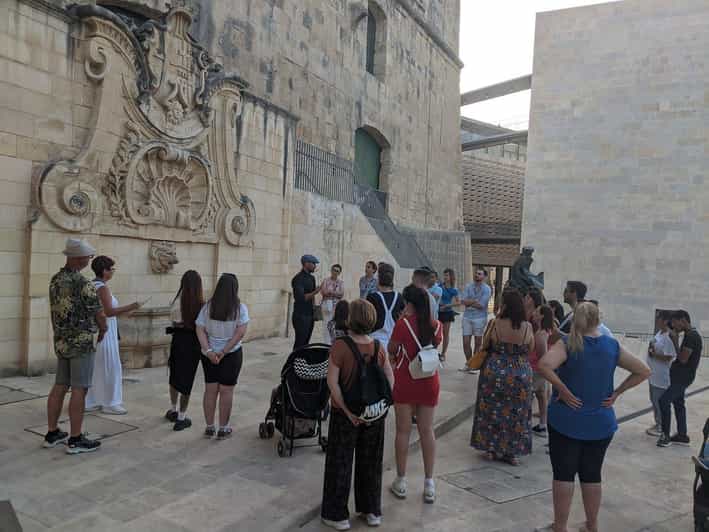
- Small-group comfort: you avoid huge crowds and keep the focus on conversation and photos
- Storytelling that acts: guides bring the Knights of Malta world to life with theatrical narration
- Photo time with purpose: a set photo stop at Upper Barrakka Gardens to catch the best angles
- Question-friendly route: you can ask things as you go, not just listen passively
- Siege-era to wartime context: the tour connects 1565, the knights, and World War II damage into one timeline
Valletta’s story comes alive on foot, not in a lecture
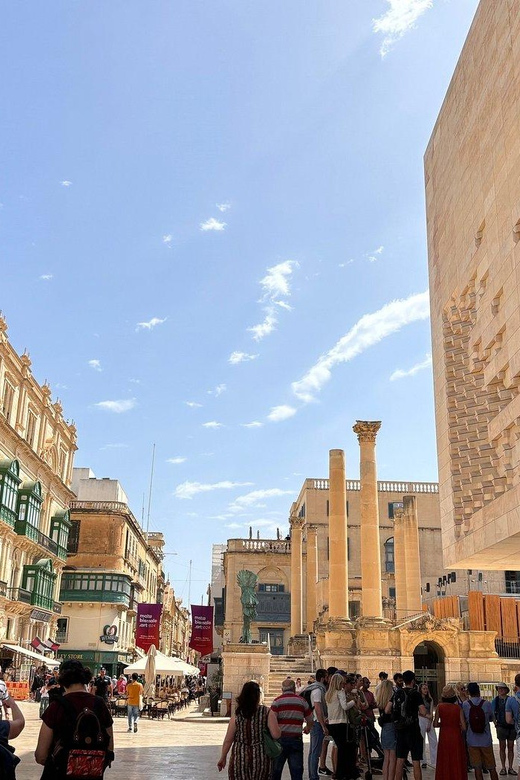
This tour is interesting because Valletta is one of those places where the setting does half the explaining. You are walking through a fortified city shaped by the Great Siege of 1565, and the guide ties that dramatic moment to what came later, including how World War II nearly destroyed parts of the city. Instead of treating it like a list of sights, the walk frames Valletta as a place that fought, survived, and kept evolving.
You will like the way the tour uses characters, drama, and quick context to make the Knights of Malta feel real. It is not just names and dates. You hear about knight life, their lavish lifestyle, and even the intriguing vow of chastity, all woven into what you see around you. If you enjoy history that feels like a story you can stand inside, this tour fits.
One more reason it works well: it is designed to be intimate. You are not stuck with a big group where questions go unanswered and you spend half your time trying to see over shoulders. The route is built for a close-up feel, which is why you can take pictures, ask questions, and still keep the momentum.
More Walking Tours in Valletta
- The Original Valletta Walking Tour
★ 5.0 · 2,719 reviews - Valletta: 3-Hour Walking Tour
★ 4.7 · 1,605 reviews - Valletta: Guided City Walking Tour
★ 4.8 · 1,256 reviews
Meeting at Triton Fountain: how the 2-hour loop plays out
The walk starts around Triton Fountain, with the guide nearby holding a HOUSE OF TOURS board. This matters more than it sounds. Triton Fountain is a landmark people can find easily, so you are less likely to waste time hunting for your group at the start.
The total time is about 2 hours, and the pace is deliberately tight. Along the way, you will get short guided introductions at major points rather than long stays. That is great if you want an orientation hit, especially on a first visit. It also means you should plan to do any deep, ticketed museum visits separately later.
You will also appreciate the flexibility of the format: it is in English, led by a live guide, and the walk is wheelchair accessible. Still, it is a walking tour, so comfortable shoes are a smart idea. Valletta’s streets can be uneven, and the best photos tend to require a little stopping and repositioning.
If you are the kind of traveler who likes to get your bearings fast, this loop is built for you. If you prefer slow travel and long, quiet time at each landmark, you may find yourself wishing for more minutes at a couple of stops.
Royal Opera House and Auberge de Castille: power in stone
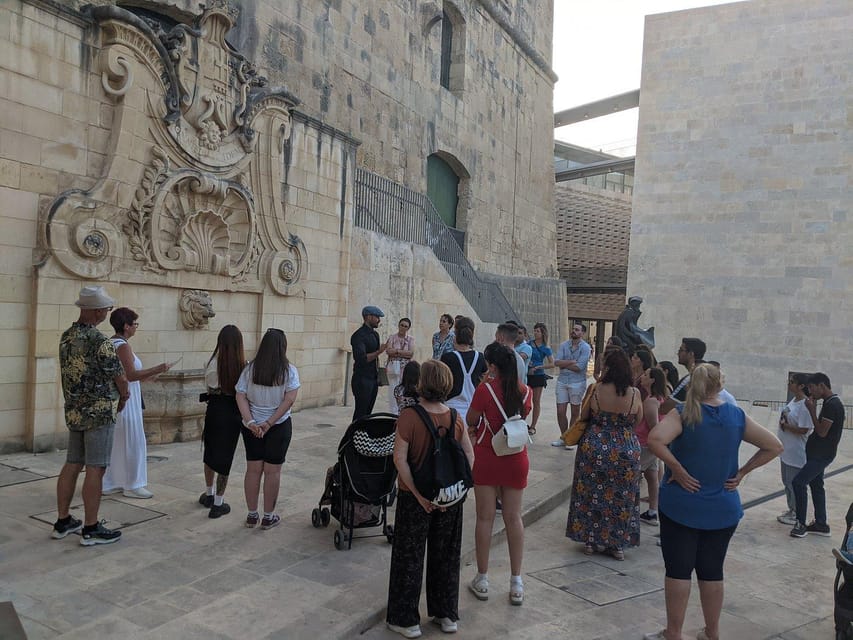
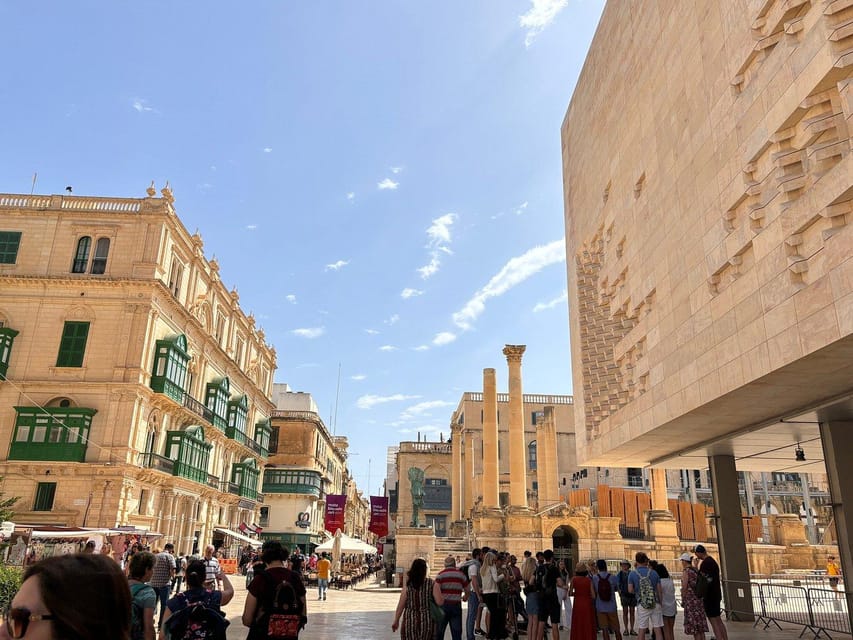
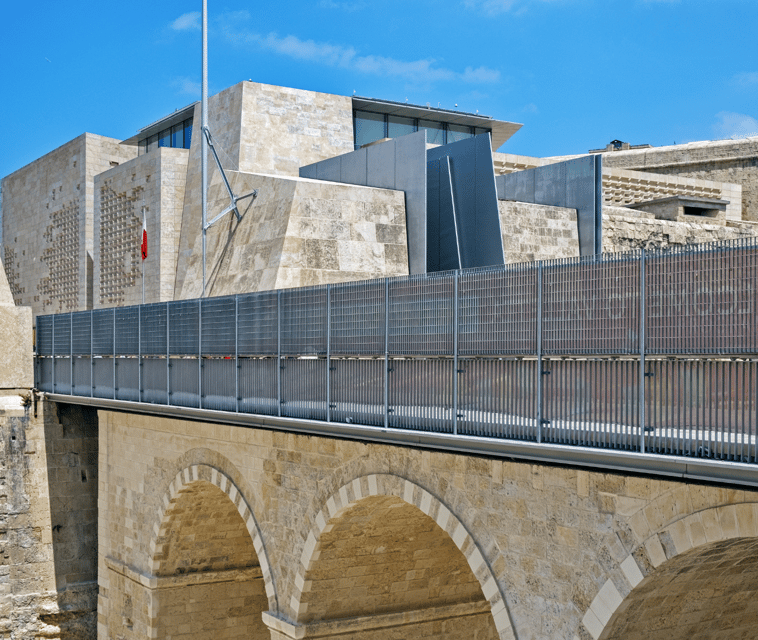
After you start at Triton Fountain, the first major guided stop is the Royal Opera House, Valletta. The time here is short, so the guide uses it for framing, not wandering. Think of this as the tour’s early setup, a way to tell you what kind of city Valletta became and how its institutions and buildings connect to the Knights’ world.
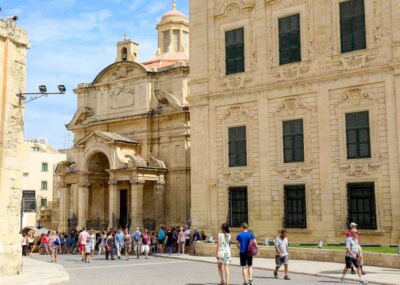
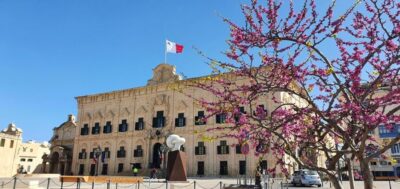
Next comes Auberge de Castille, Valletta. Again, you are not being asked to study architectural details for an hour. Instead, the guide gives you the human context, including how the knights lived and how their influence shaped what you see. This is where the storytelling style really helps. When a guide turns a building into a living backdrop, it becomes easier to remember and easier to spot later on your own.
Because these are brief stops, you should come with a couple of questions in mind. For example: what role did the Knights play here, and how did the city’s defensive mindset affect daily life? The tour is set up so you can ask, and the best guides will answer in a way that connects back to what you are seeing.
A practical note: since stops are short, you will want your phone charged and ready. Valletta rewards quick timing, especially when the light hits the stone and you want a clean frame without rushing.
Upper Barrakka Gardens: the photo stop that makes sense
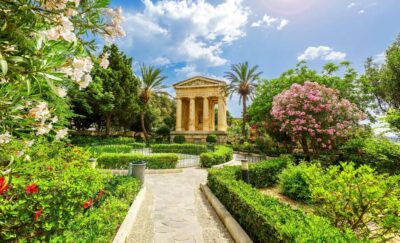
Then you reach Upper Barrakka Gardens, which includes a photo stop plus guided context. The photo time is the kind of pause that actually helps, not the awkward kind where you feel you must pose every second. You get a moment to frame the views and capture the angles that make Valletta feel like a fortified city perched above its own history.
What I like about this stop is that it is not treated like a scenic break with no story. The guide uses it to reinforce the bigger timeline, linking the city’s defensive identity to the way the knights operated and the way later events, including World War II, changed what the city could endure.
If you care about photos, this is the part where you will likely feel the most satisfied. You can take pictures at a set location and still get meaning out of the stop. If you do not care about pictures, you still get value because the view helps you understand why this city had to be built and protected the way it was.
One caution: because this is a garden viewpoint, the best photos may involve waiting a moment for people to move. With a small-group pace, you should not feel boxed in, but you might still need a little patience.
Other walks around Valletta:
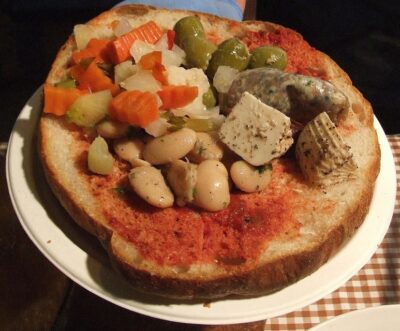
- Valletta: Street Food and Culture Walking Tour
★ 4.8 · 1,251 reviews - Valletta: City Walking Tour in a Small Group
★ 4.9 · 957 reviews - Valletta: Maltese Food and Drink Guided Walking Tour
★ 4.7 · 601 reviews - Valletta City Walking Tour
★ 5.0 · 395 reviews
Misraħ San Ġwann: finishing where the story lands
The tour finishes at Misraħ San Ġwann. That ending works well because by this point you have heard the core threads: the siege-era forging of Valletta, the knights’ lifestyle and beliefs, and the way later conflict almost shattered the city’s fabric.
By the time you reach the finish, the walk tends to feel like a timeline you can hold in your head. It is not only about stopping at landmark after landmark. You leave with a sense of how Valletta’s identity was shaped by conflict, power, faith, and survival.
If you want to keep the momentum after the tour, look around the area and decide what you want to see next. The route is designed as an orientation and a story engine, not a full-day checklist. After a tour like this, it is easier to choose what to revisit in depth, such as the big famous sites you are likely to see on the route, including St. John’s Co-Cathedral and the Grandmaster’s Palace.
What you learn: knights, vows, and one very practical connection
The content centers on how the Knights of Malta shaped Valletta, starting from the era of the crusades and running up to more recent times. You will hear about the life of a knight and how their world was tied to ceremony, status, and duty. You also learn about some of the darker, high-stakes moments tied to the city, including the bloodiest battle of the 16th century framing that connects to the Great Siege.
The tour also includes the more surprising side of the knights story, like the vow of chastity. That is the kind of detail that makes the whole era feel less like a museum exhibit and more like real human rules, real power, and real contradiction.
One of the most memorable takeaways is a modern link you can actually use. I like the way the guide connects the Knights of Malta to later history, including the fact that St John’s Ambulance in the UK originates from the Knights of St John in Valletta. That kind of connection helps you leave with something you can tell a friend, not just a list of buildings you forgot five minutes later.
If you enjoy a guide who answers follow-up questions, you are in good shape. Several guides are praised for being friendly and helpful, and for taking time to explain origins and connect dots across what you are seeing.
The price is $24, but the value is the format
At $24 per person for about 2 hours, you are paying for a professional guide, a focused route, and a story-driven approach that hits major locations without turning your day into a museum sprint. The value is strongest if you want context. If you already know the Knights of Malta story inside out, you might not feel as much payoff.
What is included is simply the guide. That means museum entrance tickets are not included, so if you want to go inside big-ticket sights, you will need to plan that separately. Still, that is normal for a walking orientation tour, and it keeps the schedule moving.
Because the tour avoids large groups, your cost buys attention. In a big crowd, you pay for time and get scattered facts. Here, you pay for a tight experience where the guide can respond to your questions and tailor the telling to what you notice.
So here is how I think about it: the price is reasonable for a guided walk that covers multiple landmarks and gives you the interpretive layer. It is not a substitute for paid museum entry, but it helps you decide what museum time is actually worth your money later.
Who this tour suits best, and where it may feel too quick
This is a good match if you like walking tours with a strong story thread. You will also enjoy it if you appreciate guides who use performance skills. One guide has an arts and acting background, and that style makes the history feel fun and easy to follow, even when the subject matter is intense.
It is also a smart choice if you want more than photo ops. You will get time to ask questions, and the route is designed to help you learn while you walk, instead of after you leave.
The main reason you might hesitate is timing. The stops are brief, and that is intentional. If you want lots of time lingering at the same site, or you prefer a slower pace with more walking between facts, you may wish the tour had more breathing room. The same goes if your ideal tour is mostly hands-on museum exploring, because this walk does not include ticketed museum time.
Should you book the Grand Tour of Valletta?
I think you should book this tour if you want a fast, memorable way to understand why Valletta looks the way it does, and why the Knights of Malta still echo through the city today. The combination of intimate group size, theatrical guide style, and a route that ends neatly at Misraħ San Ġwann makes it a strong first-or-second-day experience.
You might skip it if you already plan to spend most of your time inside museums and you want long, self-paced site time as the main event. In that case, you can still see Valletta, but you might not need a guided loop.
If you do book, bring a curious mindset. Ask questions early, grab your photos during the Upper Barrakka Gardens stop, and use the tour as your launchpad for what to see next in depth.
Added recently in Valletta
- Tour of Malta (Private Driver) Including Lunch Platter & Wine in the countryside★ 4.5 · 3 reviews
- Valletta Private Historical and Cultural Walking Tour★ 5.0 · 4 reviews
- Valletta: Express Walk with a Local in 60 minutes★ 4.9 · 4 reviews
- Shore Excursion: Private Full-Day Tour of Valletta & Mdina★ 5.0 · 4 reviews
- Private Tour in Malta Prehistoric Temples & Mdina★ 5.0 · 4 reviews
- Private Tour of the Maltese Island (Private Driver)★ 5.0 · 4 reviews
- Leisure Pass in Malta★ 4.0 · 4 reviews
- Valletta: Guided Walking Tour★ 3.8 · 5 reviews
Walking Tours, compared.
Valletta: Street Food and Culture Walking Tour
Read our review →
Valletta: Guided Walking Tour with Optional Cathedral Tour
Read our review →
The Valletta Street Food and Culture Walking Tour
Read our review →Browse the lists this tour appears in