
Reviewed · MALTA
Malta Multi Pass
This is an efficient way to see Malta without building a complicated plan day by day. I love that it links sea time (Captain Morgan cruises and island ferries) with a big stack of museum and UNESCO sites, so your itinerary feels rounded, not random. One thing to keep in mind, though, is that bus timing in Malta traffic can slow you down, and a few places have had temporary closures.
The good part is how the pass works in real life: you scan it for single entries at each site, then hop between stops that match your energy. The other part is the “do it your way” flexibility, you choose whether you spend longer at Valletta museums, chase underground tunnels, or make your day all about prehistoric temples.
Key highlights at a glance
- Unlimited hop-on hop-off buses on CitySightseeing Malta North and South routes
- Captain Morgan 90-minute Grand Harbour cruise with live commentary in English and German
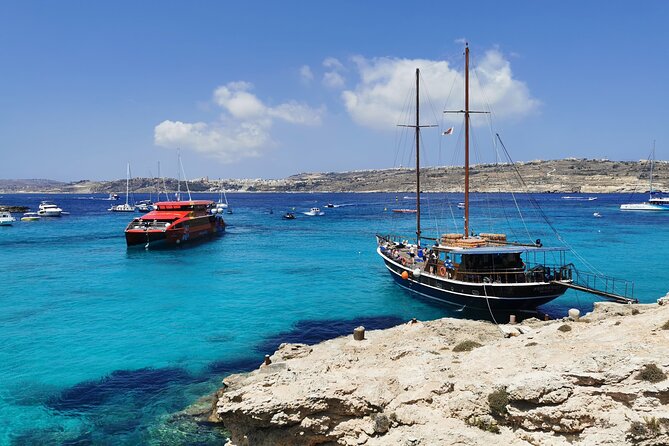
- Two Islands ferry day to Comino Blue Lagoon and Gozo with free time on land
- UNESCO temple coverage across Malta’s megalith sites (with multiple ticketed entries)
- Valletta knight-era museums and forts in and around the Grand Harbour
- Scan-and-go access to up to 20 Heritage Malta sites on longer passes
Price and value, what you are really paying for
At $88.72 per person, the Malta Multi Pass is priced like a bundle. That can feel like a big start, but the value comes from two things that add up fast in Malta: paid admissions and paid transport days.
Here is the math that matters for you: the CitySightseeing hop-on hop-off bus is a paid add-on in normal trips, and the Comino plus Gozo ferry day is also a standalone expense. Add in that many Heritage Malta sites are ticketed on their own, and suddenly a pass like this stops being a “nice-to-have” and turns into a “saves time and money” move, especially if you plan to do more than a couple of museums.
Just note the pass is not one single attraction. It is a system: buses plus cruises plus museum entries. If you only want one or two things, you may get less value than someone who wants a full itinerary.
Other Malta trips people line up beside this one:
- Malta: Gozo & Comino Islands, Blue Lagoon & Seacaves Tour
★ 4.5 · 15,672 reviews - Comino: Blue Lagoon, Crystal Lagoon, and Seacaves Tour
★ 4.6 · 5,673 reviews - Malta: Gozo, Comino, Blue & Crystal Lagoon, & Caves Cruise
★ 4.6 · 5,092 reviews
Your “day plan” starts with the bus routes and a Valletta base
Your biggest advantage is that the pass is built around getting you around Malta in a low-effort way. CitySightseeing Malta runs open-top hop-on hop-off buses on two routes, North (blue) and South (red), with audio commentary in 12+ languages. Both routes start at Valletta Harbour.
What that means for you: you can bounce between major stops like Mdina, Mosta, the Three Cities, and Marsaxlokk, then decide later if you want to keep riding or step off for one more site. It is a good match for travelers who want freedom without spending hours researching bus routes.
The reality check
One downside that shows up for this kind of hop-on hop-off system is that Malta roads and traffic can slow buses down. If your plan depends on strict timing, keep a buffer and expect that travel time can stretch. In practice, I’d treat the bus as a flexible way to reach your next stop, not as a precision clock.
Captain Morgan’s Grand Harbour Cruise: the best “set the scene” move
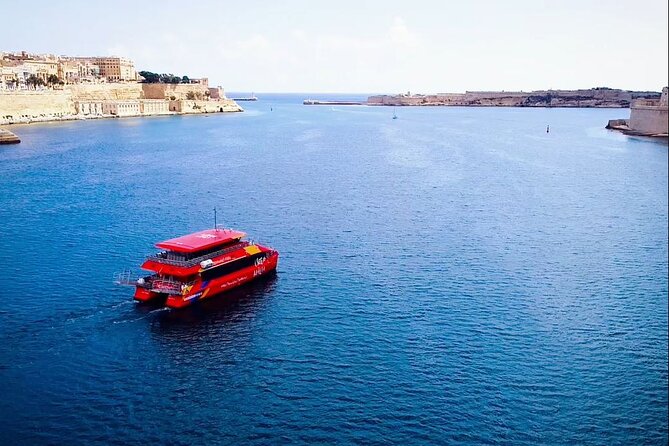
If you do only one “wow” element from the pass on day one, make it the Captain Morgan Malta Harbour Cruise. It runs for 90 minutes on a 20 metre eco-friendly harbour catamaran ferry, and it focuses on what you can’t fully appreciate from streets and viewpoints.
You cover Grand Harbour and Marsamxett Harbour on either side of Valletta. The commentary is live and multilingual, offered in English and German, and it walks through the history tied to the Great Sieges of 1565 and 1942.
Same islands, a different way to spend the day:
- Malta: Comino, Blue Lagoon, Crystal Lagoon & Caves Cruise
★ 4.7 · 2,882 reviews - From Malta: Gozo Day Trip Including Ggantija Temples
★ 4.2 · 2,399 reviews - Malta: Hop-On Hop-Off Bus Tours
★ 4.0 · 2,041 reviews - Malta: The Three Fortified Cities Tour including Boat Trip
★ 4.5 · 1,952 reviews
Why this cruise feels worth it
- You see the forts and battlements from the water, where they look most dramatic.
- The Three Cities sit across the harbour in a way that reads like a postcard, but with real texture and scale.
- You can choose indoor air-conditioned seating or sit outdoors for photos.
- There is free WiFi and restroom facilities, and you can buy food and drink from onboard vending machines.
If your schedule is tight, this cruise is also a time-saver. You get a visual overview of multiple areas in one block of time, then you can decide what to explore next by bus or on foot.
Captain Morgan’s Two Islands ferries: Comino Blue Lagoon and Gozo, done your way
The pass includes a round trip on Captain Morgan’s Two Islands ferries to Comino Blue Lagoon and Gozo. The ferry is a 33 metre eco-friendly catamaran, with year-round departures from Sliema or Bugibba. Like the cruise, you can pick outdoor or air-conditioned indoor seating.
During the day, you get free time on land, with additional ferries running between Comino and Gozo so you can mix and match. Onboard you’ll find a cash bar for drinks and snacks, plus toilet facilities.
How the Blue Lagoon day works in real terms
The Blue Lagoon is famous for turquoise, clear water. Expect that your “plan” is mostly about timing your swimming window, grabbing a shade spot, then deciding whether you want to focus more on Comino or split your time with Gozo.
On the day, you can choose to do:
- Gozo first, then Comino (about 2 hours each), or
- Comino first, then Gozo (about 2 hours each), or
- One island only for about 4 hours.
Also, plan your logistics in advance: you need to be back at the Comino embarkation point in time, and you should return to the Gozo embarkation point at least 15 minutes before departure.
CitySightseeing Malta buses: coverage is strong, timing can be slow
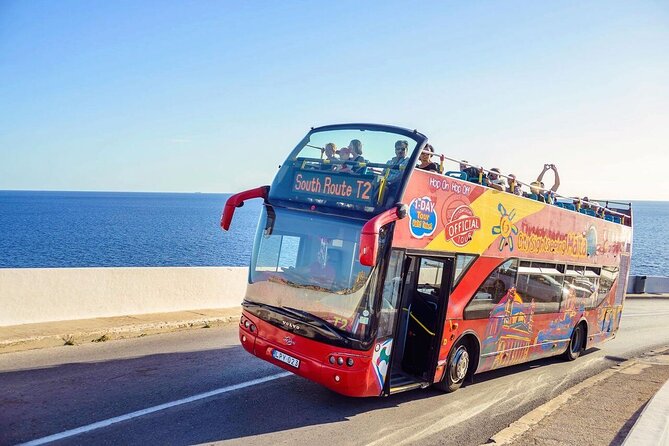
CitySightseeing Malta gives you access to 30+ stops and 40 points of interest across the North and South routes. The route lists are packed. On the North route you’ll hit things like San Anton Presidential Gardens, Mdina, Ta Qali Crafts Village, and Mosta. On the South route you’re set up for places like the Three fortified cities of Vittoriosa, Cospicua, and Senglea, Marsaxlokk, and Valletta city centre. The Blue Grotto at Wied iz-Zurrieq is included seasonally, April to October.
My practical advice
- If you are using the bus to go between far-apart areas like Valletta to Marsaxlokk, start early.
- Build your “must-see” into the first half of your day whenever possible.
- When you get to your stop, don’t waste the time you’re buying with the pass. Step in, scan, do the main circuit, then move on.
A hop-on hop-off pass works best when you treat it like a way to reduce planning stress, not like a guaranteed express train.
Ħaġar Qim and Mnajdra: UNESCO temples that feel impossible to build
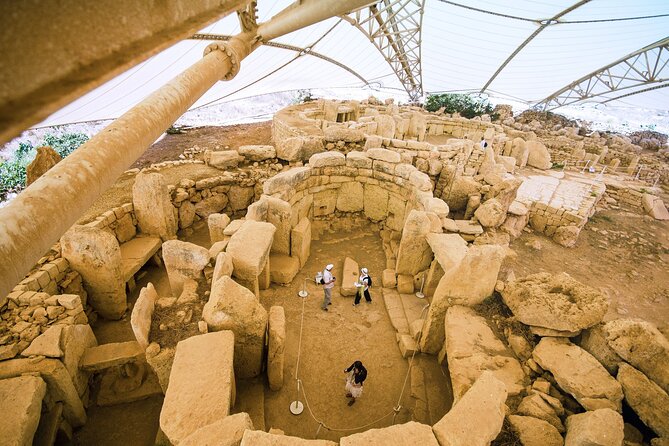
For prehistoric lovers, this pass has a built-in theme: Malta’s UNESCO megalith temple culture. Two of the top entries are Ħaġar Qim and Mnajdra.
Ħaġar Qim Archaeological Park
Ħaġar Qim sits on a hill overlooking the sea and the island of Filfa. It is on the UNESCO list. The remains suggest a date range from 3800 to 2200 BC, and the site includes a central building plus at least two more structures. Some external megaliths are huge, including a referenced 5.2 metre high stone, and other stones are estimated around 20 tonnes.
What makes it special: one chamber has an elliptical hole aligned with the Summer Solstice sunrise. There’s also a visitor centre with interactive info, which helps if you want the story without getting lost.
Mnajdra Temples
Mnajdra is on Malta’s southern coast, overlooking Filfa. This UNESCO site has three main buildings facing a shared oval forecourt. The earliest structure ties to the Ġgantija phase, then later temples include the South Temple and the Central Temple.
What makes Mnajdra feel mind-blowing: the South Temple layout and doorway align with seasonal events. It includes markers tied to equinoxes and solstices, which is why the site matters beyond basic archaeology.
A second prehistoric stack: Tarxien, Skorba, Ta’ Ħaġrat, and Borġ in-Nadur
The pass does not stop at two famous temples. It also gives you access to more megalith sites that help you see the bigger pattern.
Hal Tarxien Prehistoric Complex
This complex includes four megalithic structures built between 3800 and 2200 BC, then re-used between 2400 and 1500 BC. The South Temple is the most decorated, and evidence found at the center points to reuse as a Bronze Age cremation cemetery. There’s an elevated walkway, which is a nice perk because it changes your viewing angle.
Ta’ Ħaġrat Temples
Ta’ Ħaġrat has two well-preserved structures. It is known for its monumental doorway and facade and is noted as being built entirely of local Upper Coralline Limestone. There’s a bench running along the facade and a courtyard with chambers entered through megalithic doorways.
If you like your archaeology with architecture details you can actually see, this one is worth your time.
Skorba Prehistoric Site
Skorba is a UNESCO-listed site outside Mġarr. It’s unique for evidence about domestic life tied to the temple builders. You can see remains of two megalithic temple structures plus evidence of domestic huts. It helps you avoid the trap of thinking prehistoric sites were only about big public monuments.
Borġ in-Nadur Prehistoric Complex
Borġ in-Nadur overlooks St. George’s Bay and is only about 500 metres from Għar Dalam. Excavations helped clarify differences between Malta’s Temple Period and the Bronze Age. It includes a four-apsed temple and an enclosed area that stands out for this type of site. This one is great if you want a site that feels connected to the surrounding landscape.
Underground Malta: St Paul’s Catacombs and Ta’ Bistra Catacombs
If you want something cooler, darker, and calmer than daylight temples, the catacombs deliver.
St Paul’s Catacombs
Located outside the old Roman capital Melite, St Paul’s Catacombs served as a burial ground from Punic and Roman times. It is described as the earliest and largest archaeological evidence of Christianity in Malta. The system is interconnected underground Roman cemeteries used up to the 7th century AD.
You’ll see interconnected passages and tombs covering over 2000 square metres, plus more than 30 hypogea. The main complex includes halls with pillars shaped like Doric columns and circular rock tables used for commemorative meals during the annual festival connected to the dead.
Ta’ Bistra Catacombs
Ta’ Bistra is the largest set of tombs and catacombs accessible beyond an ancient city boundary. It was first recorded in the late 1800s, investigated in 1933, and studied again in the 2000s and 2010s with new discoveries. That makes it feel more “alive” as an archaeological story, not just a static site.
Roman life, deep time, and animal bones: Domus Romana and Għar Dalam
Malta’s story is not only about knights and temples. The pass includes two very different ways to see earlier centuries.
Domus Romana
Domus Romana gives you a glimpse into the private life of a Roman aristocrat. Expect mosaics, household artefacts, and a museum layout designed around roles, food and drink, fashion, education, and entertainment.
A highlight is a set of marble statues portraying Emperor Claudius and his family, normally found in public spaces, but shown here in a private house context.
Għar Dalam Cave and Museum
Għar Dalam is Malta’s oldest prehistoric site. It connects cave layers to animals and human evidence, including small-sized elephants and hippopotami bones and references to Ice Age layers. It also includes the “Hippopotamus Layer” deposited around 500,000 years ago.
You’ll also see evidence linked to earliest human presence, cited as about 7,400 years ago, plus an ecological garden with indigenous plants. This is a strong choice if you like your travel with natural history facts that feel grounded.
Forts and maritime power: Fort St Angelo, Fort St Elmo, and the Maritime Museum
Malta’s harbours are the heartbeat of the country’s survival story. This pass uses forts and maritime museums to teach that without a lecture.
Fort St Angelo (Three Cities area)
Fort St Angelo dominates Grand Harbour on a hillock. Whoever controlled it could influence the Maltese islands. After 1530, it became the Order of St John headquarters and played a major role during the Great Siege of 1565. Later, the Royal Navy used it, and during World War II it returned to military importance protecting against air raids.
Today, it’s a place for panoramic harbour views and immersive displays, plus examples of artillery. If you like dramatic photos, this is one of the best “stand and look” stops.
National War Museum, Fort St Elmo
Fort St Elmo is star-shaped and was built in 1552 by the Order of St John, placed strategically against Ottoman attacks. It hosted a crucial role in the Great Siege of 1565 and now holds the National War Museum.
Museum highlights mentioned include military armour tied to both the Order of St John and Ottoman Turks, Gloster Sea Gladiator N5520 FAITH, Roosevelt’s Jeep named Husky, and Malta’s George Cross award. Even if museums are not your favorite genre, this fort’s harbour views make it more than paperwork.
Malta Maritime Museum
The Maritime Museum is in the Old Naval bakery and charts 7,000 years of Malta’s maritime story. The museum describes a collection of over 20,000 artefacts tied to Malta’s maritime past.
If you enjoy odd, specific objects, this museum is built for you. It highlights items such as the largest known Roman anchor in the world and a ship model tied to the Order of St John, plus a set of cannons and a marine steam engine from the 1950s.
Valletta’s Knight-era interiors: Armoury, Inquisitor’s Palace, and the Malta Experience
If you want Malta to feel theatrical, Valletta is where the pass directs you.
Palace Armoury
The Palace Armoury is all about the Knights of St John and what armour meant as status. It is described as not only defensive gear, but a display of wealth and power. You’ll see suits of armour connected with Grand Masters Alof de Wignacourt and Jean de La Valette, armour and weapons from the Great Siege era, plus artillery.
Inquisitor’s Palace
The Inquisitor’s Palace is in Birgu and is one of the few surviving buildings of its kind. It features reconstructed rooms including the kitchen area, the piano nobile ambiance, private quarters, and parts tied to the Holy Office Tribunal, prison complex, and a torture chamber.
The building also includes the National Museum of Ethnography, with permanent displays focused on Malta’s religious traditions as shaped by the Inquisition.
State Rooms note
The Grand Master’s Palace State Rooms are listed as temporarily closed until further notice. If your plan depends on that particular room, swap in nearby Armoury and Inquisitor’s Palace entries instead.
The Malta Experience
The Malta Experience is an audio-visual show in a panoramic auditorium, running 45 minutes and told in 17 simultaneous languages. It is based in a building that was originally the Holy Infirmary of the Knights of St John. If you want a “map in your head” before museums, this is one of the most efficient ways to orient yourself.
La Sacra Infermeria guided tour
There is also a guided English tour of La Sacra Infermeria, described as a professional guide-led experience. This is tied to the history of the Holy Infirmary, including the Great Ward at 155 metres long and the long period from the Knights through British control. If you like human stories in history, this adds a different flavor than the forts.
Cathedrals and community museums: Mdina Cathedral, MUZA, and archaeology museums
This pass also gives you museum variety so you are not stuck doing only one theme.
Mdina Cathedral Museum
If you have the longer pass option, the Mdina Cathedral Museum pairing is included. You can visit St Paul’s Cathedral built in 1702 and see the adjacent Mdina Cathedral Museum, with fine silverware, rare coins, and prints and engravings by Albrecht Dürer, plus other art objects and wax reliefs.
MUZA – The Malta National Community Art Museum
MUZA is set up around story themes like The Mediterranean, Europe, Empire, and The Artist. It is described as mixing old masters with contemporary works and using videos and interactive elements. It also sits in a historic seat of the Italian knights of the Order of St John, which means the building itself is part of the visit.
National Museum of Archaeology and Natural History Museum
The National Museum of Archaeology is listed as included on longer passes. The Natural History Museum is in the Auberge de Provence and is known for baroque decorations. The Gran Salon ceiling and painted walls are part of the appeal, not just the objects. The museum covers artefacts from the Neolithic up to the Phoenician period, including named items like the Sleeping Lady and the Venus of Malta.
Science and family-friendly breaks: Esplora and Malta National Aquarium
Sometimes you need a reset from stones and tunnels.
Esplora Interactive Science Centre
Esplora is an interactive science centre with more than 200 exhibits in interconnected buildings and outdoor space. It also has an activity centre for workshops and science shows.
The planetarium is a standout detail in the listing: it has a 10.7 metre diameter structure and a full-dome Color space 4K theatre system, located suspended in the shell of the old Auxiliary hospital building overlooking Grand Harbour.
Malta National Aquarium
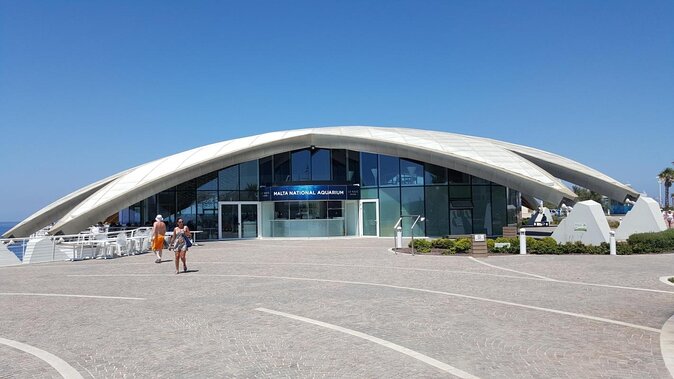
The Malta National Aquarium is family-friendly and described as a curved starfish-shaped building. It has 41 tanks, including a main tank with Indian Ocean species like black-tip sharks, horn sharks, zebra sharks, and rays, plus a glass tunnel. There are indoor and outdoor areas, and it is set with a landscaped promenade where you can take in views of St. Paul’s Islands.
Practical tips that prevent wasted time
This pass can be smooth, but it has a couple of weak points, and you should plan around them.
QR access: be ready before your first scan
Some people hit stress because their QR code needed activation before it would scan. I’d treat your first morning like a mission:
- Take a screenshot of your pass details and keep them in your phone gallery.
- If something will not scan, try again at the next site or ask onsite help before you give up.
- If you wait until you are tired, the day can snowball into missed entries.
If your pass is delivered as a QR code ticket, make sure you have it accessible before your first attraction time.
Keep an alternate plan for closures
Two specific items are listed as temporarily closed: the Grand Master’s Palace State Rooms and the Fortress Builders Interpretation Centre. Build your day knowing that one attraction may be unavailable and you can still fill the time with nearby museums and forts.
Bring realistic timing expectations for buses
Even if a stop is “on the route,” buses can get delayed by traffic. Schedule your day so you are not racing between two far-apart areas at the same hour.
Should you book the Malta Multi Pass? My call
Book it if you want a stress-reducing way to see a lot of Malta in a short trip, especially if you plan to do multiple paid admissions and at least one sea day. It is a strong value play when you want both the big names and the under-the-surface sites like catacombs and prehistoric temples.
Skip it if you are very timing-sensitive, or if you prefer tightly scheduled tours where you know every departure minute. The bus component can frustrate you if you expect it to behave like a metro, and a few entries can be temporarily closed.
If you do book, do it with a simple mindset: use the pass to structure choices, then build in buffer time. That is where the value really shows.
FAQ
How many days is the Malta Multi Pass valid for?
You can choose multi-day pass options that run for consecutive days once activated, including options from 3 to 7 days depending on the package.
What is included on the water in the Malta Multi Pass?
The pass includes a Captain Morgan 90-minute Grand Harbour Cruise and a Captain Morgan Two Islands ferry round trip to Comino Blue Lagoon and Gozo (on the relevant pass options).
Do the included tours have English commentary?
Yes. The pass is offered in English, and the harbour cruise includes live commentary in English and German.
Which prehistoric UNESCO sites can you enter with longer passes?
With the longer pass options, the included list covers entry to Ħaġar Qim and Mnajdra, plus additional temple sites like Tarxien, Skorba, Ta’ Ħaġrat, and Borġ in-Nadur.
Is Hal Saflieni Hypogeum included?
It is described as not included in the pass bundle, and it requires separate tickets and advance reservations.
What if a site is temporarily closed?
Some sites are listed as temporarily closed, including the Palace State Rooms and the Fortress Builders Interpretation Centre, so you may need to swap to another included attraction.
Does the harbour cruise have onboard facilities?
Yes. The cruise includes free WiFi and restroom facilities, and you can buy food and drink from onboard vending machines.
Is good weather required?
The experience notes that it requires good weather. If it is canceled due to poor weather, you will be offered a different date or a full refund.
Can I use the pass for one entry at each place?
Yes. You scan the multi-day pass for single entry admission at each included attraction.
Added recently in Malta
- Reggae Sunset Cruise in Malta★ 4.5 · 3 reviews
- Valletta City of Gentlemen guided walking tour★ 3.5 · 3 reviews
- Sensory Coffee Master Class: A Unique Island Experience★ 5.0 · 4 reviews
- Truffle Making Master Class★ 4.5 · 5 reviews
- Valletta’s Hidden Minds: Self-Guided Psychological Puzzle Walk★ 4.0 · 6 reviews
- Victoria Lines Tour★ 5.0 · 8 reviews
- Valletta: Private Massage from a world renowned masseuse★ 4.6 · 9 reviews
- Private Walking Tour of Vittoriosa /3 Cities★ 5.0 · 9 reviews